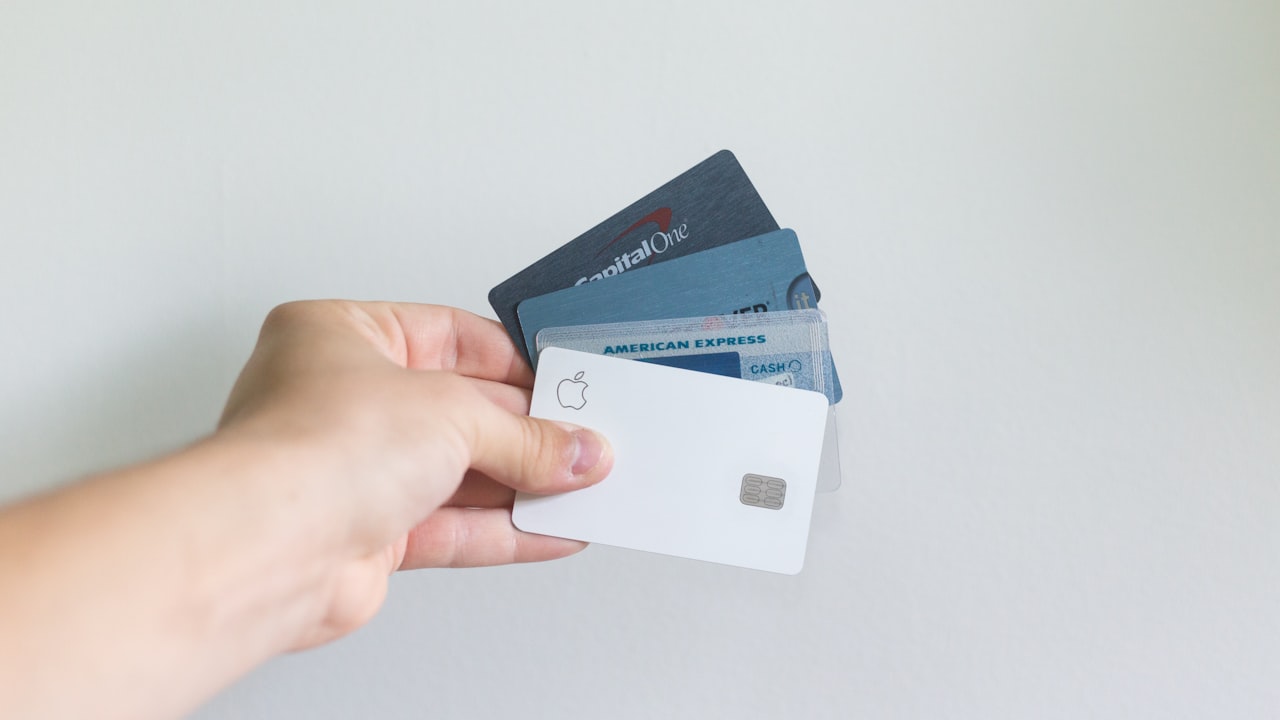
What Is a Crypto Rebate?
A crypto rebate is a percentage of your transaction amount returned to your account, usually instantly or within 24 hours. On a crypto debit card, rebates work by:
- You swipe the card at any merchant.
- A percentage of the purchase (often 0.5–3%) is calculated and sent back to your wallet.
- The rebate is credited in crypto, stablecoin, or fiat — depending on the card.
Signal: Rebates shine when you spend across many merchants — the reward accumulates on EVERY purchase without category limits or monthly caps.
Key metric: ether.fi Cash rebates start at up to 3% on the first $2,000 USD monthly spend, then step to 1% on the next $1,000, then 0.5% above that. No dining, grocery, or travel bonuses — just flat-rate per band.
What Is Cashback on Crypto Cards?
Cashback is essentially the same mechanic: a percentage of your spend returned to you. Historically, traditional credit cards offered cashback on specific categories (5% groceries, 3% dining, 1% everything else). Crypto cashback generally works the same way — but a crypto debit card offering cashback does it across all merchants, no categories.
On ether.fi Cash, for example, cashback is applied uniformly to all purchases within each spend tier. Unlike category-locked traditional cards, there’s no juggling of “which card for which purchase.”
Why it matters: Crypto cards remove the mental load of category switching. You carry ONE card, get the same rate everywhere, and don’t miss rewards because you used the “wrong” card.
Risk: Cashback rates decrease with higher spend — it’s a tiering system, not a flat % on everything. Spending $50k/month gets you 0.5%, not the headline 3%. Plan your expectations around that tier, not the advertised max.
Rebate vs Cashback: Key Differences
Calculation method:
- Rebates compute as a % of each transaction, credited immediately or daily.
- Cashback also computes as %, but may batch weekly or monthly.
Payout timing:
- Rebate cards pay out instantly (within hours or a day).
- Cashback cards often batch (weekly or end-of-month settlements).
Earning scope:
- Rebates apply to all purchases with no category restrictions.
- Cashback varies — some cards limit by category, others are all-purchases like rebates.
Payout currency:
- Rebates often land as crypto or stablecoin; you control conversion.
- Cashback may default to fiat or card-account credit.
Signal: Rebate and cashback are often identical on modern crypto cards — the term used is mostly marketing. Focus on the rate and tier structure, not the label.
Which Is Better for You?
Rebates and cashback are two sides of the same coin on most crypto debit cards. Your choice depends on:
Choose rebates if:
- You want instant feedback (rebate posted immediately to your wallet).
- You prefer crypto-denominated rewards.
- You spend across many merchants and want no category confusion.
Choose cashback if:
- You want fiat payouts to minimize volatility.
- You’re comfortable with batched weekly or monthly settlements.
- You prefer the mental model of “cashback” from credit cards versus crypto cards.
Reality check: Most modern crypto cards — including ether.fi Cash — blur the line. They call it cashback, process it like a rebate, and let you choose the payout currency. Read the fine print on YOUR card, not the label.
How Crypto Cards Stack Up
ether.fi Cash is a non-custodial card that delivers rewards as rebates (though the issuer calls it cashback). Here’s how it compares:
Earning structure: Up to 3% on the first $2,000 monthly (USD); 1% on the next $1,000; 0.5% above that. No merchant categories. Currency support: USD; EUR coming soon.
Physical card fee: Core tier $50, Luxe $100, Pinnacle $100, VIP $0. One-time, non-refundable. Virtual cards are free.
Payout: Rebates credited to your ether.fi account; you control withdrawal to your wallet.
Why it matters: You keep full custody of your rewards. Unlike some custodial cards where rewards sit in a card account, ether.fi deposits rewards to your self-hosted wallet. This is why crypto cards are safe — your rewards don’t sit in a company’s hands.
Watch: ether.fi is available only in select jurisdictions (check the supported country list). If you’re outside supported regions, you’ll need alternatives — crypto card availability varies widely by location.
When Rebates Trump Cashback
Rebates win when: You value speed and crypto rails. If you want your reward in your wallet the same day, a rebate card beats a weekly cashback payout. You also avoid the risk of a company holding your rewards in a custodial account.
Cashback wins when: You want fiat stability. A fiat-based cashback reward eliminates the volatility of holding crypto while you decide what to do with it. Some people prefer the simplicity.
Tie: Most modern crypto cards offer both. ether.fi lets you hold your rebates in stablecoins, which gives you the best of both — instant rebate mechanics + fiat-like stability.
Key metric: The average crypto card user sees $50–150/month in rebates on normal spending ($2k–5k monthly). At ether.fi’s rates, a $3k/month spend yields ~$50 (3% on $2k, 1% on $1k), no surprises.
The Regulatory Backdrop
Crypto cards operate in a complex compliance landscape. Regulations vary by country and region. Some jurisdictions are welcoming (USA, UK, much of APAC); others have strict caps or bans. ether.fi operates legally in supported countries but does not serve restricted regions (Cuba, Iran, North Korea, Venezuela, and others listed on their help page). Before signing up, verify that your country is on the supported list — if not, compare alternatives that serve your region.
Key metric: ether.fi supports 150+ countries today, though that list tightens in highly regulated zones (EU post-MiCA, parts of Asia). The number grows as compliance frameworks mature.
What to Watch
- Tier drift: Rebate tiers can change. Monitor your card issuer’s announcements — a 3% tier that drops to 2% mid-year is a common business move.
- Availability shifts: Crypto card regulations are evolving, especially post-MiCA in the EU. If you’re in a region close to restriction boundaries, verify support quarterly.
- Payout delays: Some cards batch rebates daily or weekly during high-volume periods. Expect delays during volatile markets, and factor that into your reward expectations.
- Tax liability: Rebates are taxable income in most jurisdictions. Record all payouts and payout dates for your CPA — crypto card tax implications are complex and region-specific.
- Fee changes: Card issuance fees ($50–$100) can be raised without notice. Track your issuer’s fee announcements if you rely on the physical card.
Bottom Line
- Rebate and cashback are the same mechanism — the difference is marketing, not function. Both are percentages of your spend returned to your account. Focus on the rate, tier structure, and payout method, not the label.
- ether.fi Cash delivers up to 3% rebates on the first $2,000 USD monthly spend (Core membership), steps to 1% on the next $1,000, then 0.5% above that, with no merchant-category limits. Rebates land directly in your self-hosted wallet.
- Self-custody beats custodial rewards — your earnings go straight to your wallet, not held by the card company. That eliminates counterparty risk on your rebate balance.
- If you spend $2k–$5k monthly and live in a supported region, sign up for ether.fi Cash and earn $50–$150/month in rebates while keeping full control of your rewards.
FAQ
-
q: “Are crypto rebates the same as cashback?” a: Functionally, yes — both are percentages of your transaction returned to you. The term ‘rebate’ usually implies instant crediting; ‘cashback’ often implies batched settlements. On modern crypto cards like ether.fi, they work identically.
-
q: “Why do rebate rates drop with higher spending?” a: Card issuers use tiered rates to limit costs at scale. The 3% tier is profitable for smaller transactions. Above $2,000–$3,000 monthly, they move to 1–0.5% to sustain the program. It’s a business model constraint, not a trap.
-
q: “Are crypto rebates taxable income?” a: Yes, in most jurisdictions. Rebates are income at the time they’re credited, valued at that day’s exchange rate. Record all rebate payouts and dates for your tax return — crypto cards don’t generate 1099s automatically.
-
q: “Can I earn rebates on subscriptions and recurring charges?” a: Yes. Rebates apply to all card transactions that clear the network — subscriptions, one-time purchases, and recurring charges all earn. The only exception is transactions that fail or are refunded.
-
q: “What’s the difference between a crypto debit card and a prepaid card?” a: A crypto debit card is backed by your own crypto balance; you load it and the card converts to fiat at checkout. A prepaid card is backed by an issuer’s account holding your money. Crypto cards give you full custody; prepaid cards don’t.
-
q: “Is ether.fi Cash available where I live?” a: ether.fi Cash is available in select jurisdictions worldwide. Check the supported-country list before signing up — availability is limited in some regions by regulation.
Risk & Disclosure
Affiliate disclosure: DefyCard publishes affiliate-linked reviews. We may earn a commission when you sign up via our link above. This does not change your pricing; it supports our work.
Crypto volatility: Rebates paid in crypto or stablecoins carry volatility risk. Stablecoins are designed to hold a $1 peg but can depeg under stress. Withdraw or convert your earnings as soon as you receive them if volatility concerns you.
Country restrictions: ether.fi Cash is not available in all jurisdictions. Check supported countries before signing up. If unavailable in your region, alternative cards (Crypto.com, Coinbase, RedotPay) may serve you better.
Not financial advice: This article educates you on how crypto rebates and cashback work. It is not investment advice, tax advice, or a recommendation to use any specific card. Do your own research and consult professionals (CPA, financial advisor) before making spending decisions.