What Is a Non-Custodial Crypto Card?
Key metric: Non-custodial cards represent roughly 5–8% of total crypto-card volume, with the remainder dominated by custodial alternatives like Crypto.com and Coinbase. Yet they’re the fastest-growing segment among self-custody advocates.
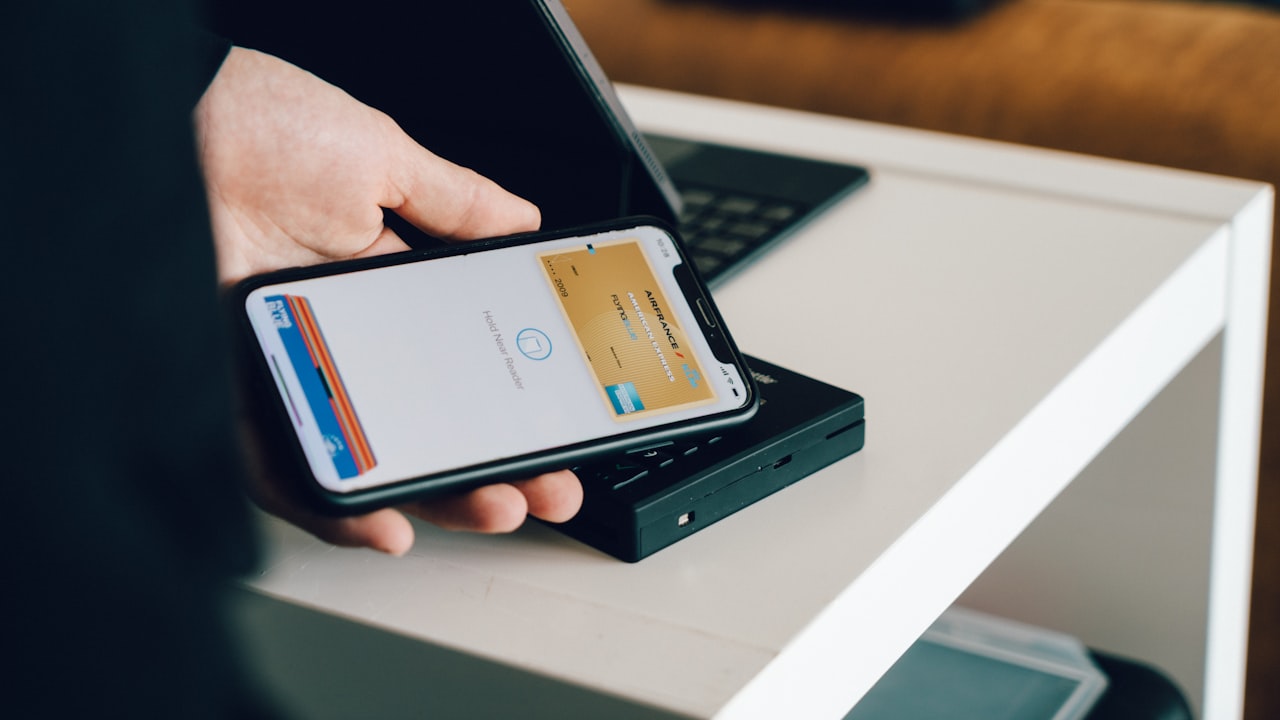
A non-custodial crypto card is a payment tool that lets you spend cryptocurrency while keeping your private keys. When you use the MetaMask Card, you maintain full control of your wallet—the issuer never holds your crypto or keys. You approve each transaction from your device, then the card converts your crypto to fiat and processes the payment.
Signal: Non-custodial appeals to security-conscious users who refuse to deposit on platforms. If self-custody is non-negotiable, this model eliminates the counterparty risk that traditional crypto-card issuers demand.
This contrasts sharply with custodial cards (Crypto.com, Coinbase, Binance). With custodial, you deposit crypto into the issuer’s account, and they control the keys. You gain convenience but accept exchange risk—if the issuer gets hacked or frozen, your assets may be inaccessible.
How the MetaMask Card Works
Why it matters: Understanding the flow reveals why non-custodial requires more friction than custodial.
Here’s the cycle:
- 1. Connect wallet — Link MetaMask to the card app.
- 2. Initiate purchase — At checkout, a notification appears on your phone.
- 3. Approve in wallet — You confirm the transaction in MetaMask (takes ~15–30 seconds).
- 4. Crypto-to-fiat swap — Your cryptocurrency converts to the local currency (USD, EUR, etc.).
- 5. Card processes — Visa processes the fiat payment to the merchant.
- 6. Settlement — Proceeds settle within 1–3 business days (issuer-dependent).
Risk: Each transaction requires active approval from your device. This adds friction compared to traditional cards, where you tap and spend instantly. In low-connectivity scenarios or international travel with poor signal, completing a purchase may be impossible.
Alternative: If transaction approval feels too cumbersome, a custodial card or hybrid approach (like ether.fi Cash, which combines non-custodial architecture with faster spending approval) may suit you better.
What Is the Bleap Card?
Signal: Bleap is another non-custodial Visa card in the emerging ecosystem. Like the MetaMask Card, Bleap emphasizes self-custody and requires transaction approval from your wallet.
Bleap operates under the same security model as MetaMask Card: your private keys stay in your control, and the issuer never holds your assets. The fee structure, cashback terms, and supported networks vary between the two. Since the crypto-card landscape evolves monthly, always verify the current terms on Bleap’s official issuer site.
Why it matters: If you’re comparing non-custodial cards, both Bleap and MetaMask Card prioritize security identically. Differences emerge in supported networks (which L2s?), country availability, and user experience. Neither is universally “better”—choice depends on your region and which blockchains you use.
MetaMask Card vs. Gnosis Pay
Gnosis Pay is the third major non-custodial card, also requiring wallet approval per transaction. Like MetaMask Card, it’s built for self-custody users on Ethereum and partner networks.
Key metric: Gnosis Pay represents a smaller market share (~2.6% of on-chain card volume) compared to larger competitors. The card still operates, but its affiliate distribution model changed in 2024.
Watch: Gnosis Pay’s direct referral program closed to new affiliates in 2024, shifting to a B2B-partner model. If you find a dead Gnosis Pay referral link, that explains why—distribution moved to partnerships like Zeal (EU) and Picnic (Brazil). MetaMask Card remains openly distributed via affiliate programs, making it more accessible to discover.
Why it matters: For product comparison, Gnosis Pay and MetaMask Card are functionally similar. The real difference is distribution and regional support, not features or security.
Non-Custodial vs. Custodial Spending
The MetaMask Card occupies a niche segment. Most crypto-card volume flows through custodial providers—Crypto.com, Binance, Coinbase—where you deposit crypto and the issuer holds the keys.
Here’s the tradeoff in plain language:
Non-custodial (MetaMask):
- You control private keys — issuer cannot access your wallet
- You approve each transaction — friction, but absolute control
- Account compromise = isolated — only the card issuer’s systems are at risk
- Cashback rates — typically 0–1%, lower than custodial
- Sign-up ease — moderate; requires wallet connection
Custodial (Crypto.com):
- Issuer controls keys — you trust them completely
- Tap and spend — zero friction, instant approval
- Account compromise = full exposure — issuer hack exposes all your holdings
- Cashback rates — often 2–5%, higher than non-custodial
- Sign-up ease — simple; just email + password
Watch: Non-custodial cards are growing, but they remain a niche. If high cashback rates or seamless spending experience are priorities, custodial cards dominate those categories. Non-custodial wins on security principle, not rewards.
Why Choose a Non-Custodial Card?
Signal: Non-custodial cards appeal strongest to:
- Developers and Ethereum power users — already comfortable with wallets and private keys
- Users who refuse exchange deposits — philosophically opposed to platform custody
- HODLers seeking liquidity — want to access spending without selling holdings
- High-security practitioners — willing to accept approval friction for private-key control
If convenience and maximum cashback matter more than custody philosophy, a custodial card or a hybrid like ether.fi Cash (non-custodial with ETH staking + up to 3% cashback) may serve you better.
Is the MetaMask Card Right for You?
Ask yourself these questions:
- Do you refuse to deposit crypto on platforms? → Non-custodial is essential for you.
- Can you tolerate 15–30s approval per transaction? → If not, custodial is simpler.
- Does your country support the MetaMask Card? → Non-custodial cards have limited geographic reach. Verify live eligibility before sign-up.
- Are you maximizing for rewards? → Non-custodial cards rarely match custodial cashback rates. Compare carefully.
- Do you want self-custody + yield? → Hybrid cards like ether.fi Cash combine both benefits. Explore the alternative.
What to Watch
- Network expansion — MetaMask Card, Gnosis Pay, and Bleap are rolling out support for Arbitrum, Optimism, and Polygon. Check issuer announcements for Q2–Q3 2026 updates.
- MiCA compliance shifts — The EU’s Markets in Crypto Assets Regulation (MiCA) affects who can issue and use non-custodial cards. Country support may change mid-year; verify before signing up.
- Yield-integrated cards emerging — ether.fi Cash and others are blending non-custodial architecture with staking rewards. Non-custodial-only may lose ground to hybrids.
- Referral program consolidation — Gnosis Pay’s referral program closed; others may follow. If affiliate links disappear, check partner distribution channels (Zeal, Picnic, etc.).
- Account abstraction adoption — New protocols may reduce transaction-approval friction. Watch for major UX improvements in Q3 2026+.
Bottom Line
- Non-custodial cards let you spend crypto while keeping private-key control. MetaMask Card, Gnosis Pay, and Bleap all use this model—ideal for security-conscious users.
- The trade-off is friction: every transaction requires wallet approval, and cashback rates are typically lower than custodial alternatives.
- If self-custody is your priority, a non-custodial card bridges that philosophy and everyday spending. Compare networks, country support, and fees—they vary.
- If you want yield + self-custody, ether.fi Cash offers up to 3% cashback combined with non-custodial ETH staking—a hybrid that covers both bases.
FAQ
Q: What is the MetaMask Card in one sentence? A: A Visa card that converts your crypto to fiat at checkout while you remain in control of your private keys—no deposit to a third party required.
Q: How does what is the metamask card differ from what is bleap card? A: Both are non-custodial Visa cards using the same security model (you keep your keys, you approve each transaction). Differences lie in supported networks, geographic availability, and fee structure. Visit each issuer’s site to compare current terms.
Q: What is Gnosis Pay and how is it different? A: Gnosis Pay is a non-custodial card similar to MetaMask Card, but with closed direct-referral distribution (now partners only: Zeal in EU, Picnic in Brazil). Functionally, both cards use the same self-custody + per-transaction-approval model.
Q: Do non-custodial cards offer cashback? A: Some do, but rates are typically lower (0–1%) than custodial cards, reflecting their smaller scale and operational complexity. The ether.fi Cash card offers a hybrid approach with up to 3% cashback.
Q: Is a non-custodial card safer than Crypto.com? A: Safer regarding private-key compromise (you keep yours; Crypto.com keeps theirs). Both use security measures. The difference: non-custodial means your device security is entirely your responsibility. A compromised personal device exposes a non-custodial card; a compromised exchange exposes a custodial card. Different risk models, not a simple “better.”
Q: Which countries support the MetaMask Card? A: Non-custodial cards operate in a limited set of countries and eligibility changes with regulation (especially under the EU’s MiCA). Verify live country support on the MetaMask Card issuer’s help center before sign-up.
Q: How does what is gnosis pay relate to what is bleap card? A: Both Gnosis Pay and Bleap are non-custodial cards with the same wallet-approval-per-transaction model as MetaMask Card. All three prioritize self-custody over convenience. Choose based on which networks you use, your region, and fee structure.
Risk & Disclosure
FTC Disclosure (repeated): DefyCard publishes affiliate-linked content and may earn a commission when you sign up through our links. This supports our research and keeps this guide free.
Cryptocurrency volatility: Non-custodial cards expose you to FX conversion risk. If crypto prices swing while you’re converting to fiat at checkout, you may receive worse rates. Consider pre-converting or using limit orders if price moves concern you.
Country restrictions: Non-custodial cards operate in narrower country sets than custodial alternatives. Eligibility changes as regulations evolve (especially under the EU’s MiCA and similar frameworks). Always verify with the issuer that your country is supported before committing.
Self-custody = self-responsibility: Owning a non-custodial card means you own the security risk of your device. Device compromise, loss of private keys, or phishing cause financial loss with no recovery path. This is not the issuer’s fault—it’s the trade-off of non-custodial. Use only if confident in your device security.