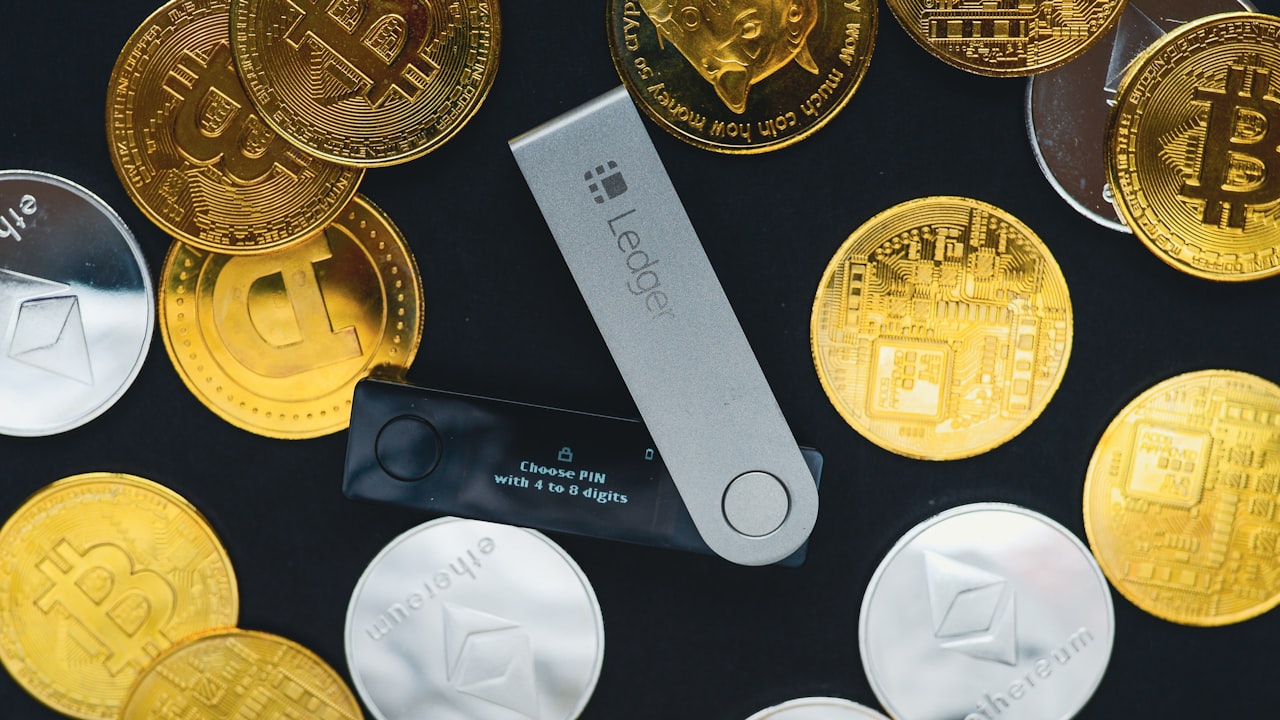
What Gnosis Pay Was: A Non-Custodial Card for Self-Custody Builders
Gnosis Pay arrived as an EOA-based Visa card backed by Gnosis Safe, the self-custody standard. Unlike Crypto.com or Coinbase (which custody your crypto), Gnosis Pay let you spend directly from your own Ethereum wallet. You held the private keys. The card became popular with self-custody maximalists who refused to deposit assets with a centralized exchange.
Signal: Non-custodial Visa cards appeal to a small, passionate audience—builders who already use Gnosis Safe, users in regions without access to CEX cards, and privacy-focused traders. The market for this product exists, but it’s smaller than the CEX-card market.
Market data shows Gnosis Pay captured approximately 2.6 % of the non-custodial (on-chain) card volume as of early 2026, with cumulative spending around $167 million. It was the third-largest non-custodial card by volume, after RedotPay and ether.fi Cash.
Why Gnosis Pay Closed Its Affiliate Program
In late 2024 through early 2025, Gnosis Pay wound down its direct affiliate program. The company announced a pivot to B2B partnerships—working exclusively with institutional partners, corporate treasuries, and white-label payment providers. Consumer affiliate signup bonuses (historically around €30 per active user) ended.
The reason: The consumer crypto-card market is consolidating. Non-custodial cards are a niche product, and the cost of acquiring individual users via affiliate marketing outweighs the LTV from small-balance holders. Gnosis shifted strategy to embed its card infrastructure into larger platforms (like Zeal in the EU and Picnic in Brazil), where the distribution already exists.
Key metric: Direct consumer acquisition for non-custodial cards costs approximately 2–3× more per user than CEX-card acquisition, because the audience is smaller and more dispersed. Affiliate revenue ($30 per signup) doesn’t justify the customer-acquisition cost.
Today, Gnosis Pay is still operational for existing users. If you already have a Gnosis Safe wallet with an active Gnosis Pay card, you can continue spending. But new users cannot sign up directly—they must go through a B2B partner like Zeal (EU) or Picnic (Brazil).
ether.fi Cash: The Non-Custodial Alternative That’s Actually Growing
While Gnosis Pay retreated to B2B, ether.fi Cash has emerged as the leader in non-custodial crypto cards. Here’s why it matters for anyone seeking self-custody payments:
Cashback & rewards: ether.fi Cash offers up to 3 % cashback on all purchases. Unlike Gnosis Pay’s varying partner rewards, ether.fi has standardized, transparent rates.
Custody model: Like Gnosis Pay, ether.fi Cash is self-custodial—your ETH stays in your wallet, staked if you choose. You control the keys. The card is linked to your non-custodial balance.
FX & fees: Zero foreign-exchange fees on USD and EUR. A 1 % FX fee applies to all other currencies. ATM withdrawals incur a 2 % fee. Physical card deposits are refundable ($40 Core tier).
Market dominance: ether.fi Cash holds approximately 6.4 % of non-custodial card volume ($405M), and is the second-largest non-custodial card globally, trending upward. Why the growth? Staking rewards. Users stake their ETH through ether.fi, earn yield, and then spend the card without selling. The “yield while spending” angle is unique.
Signal: If you’re choosing between a non-custodial card and a CEX card, the decision matrix is: non-custodial if you value self-custody and are willing to hold ETH long-term; CEX if you need instant fiat conversion and don’t mind counterparty risk.
Affiliate availability: Unlike Gnosis Pay, ether.fi Cash actively recruits affiliates. You can sign up for the ether.fi affiliate program and earn recurring commissions (0.1 % to 0.3 %, tiered). This article itself is part of that program.
Gnosis Pay vs. ether.fi Cash: Side-by-Side
Both are non-custodial, so the comparison is about cashback, fees, and ecosystem:
Cashback: ether.fi offers a standardized 3 % base. Gnosis Pay varies by partner (now limited to B2B integrations).
Network: Both operate on Ethereum. ether.fi also supports Scroll network staking.
Availability: Gnosis Pay is available in EU, Brazil, select regions via B2B partners. ether.fi Cash is available in 76 countries for shipping, with 20 outright prohibited (e.g., Russia, China, India, Netherlands). See country availability for details.
Yield: ether.fi integrates staking—earn while you hold. Gnosis Pay does not explicitly offer staking rewards, though integration is possible via Gnosis Safe plugins.
Affiliate program: Gnosis Pay closed to new affiliates. ether.fi is actively recruiting.
Why it matters: If you’re building on Gnosis Safe and want a card, you now need a B2B partner (Zeal / Picnic). If you’re a self-custody user anywhere else globally, ether.fi Cash is the most accessible non-custodial option with the most generous cashback.
Risk: Non-custodial cards are still emerging. Infrastructure risk exists—if the card provider fails, your wallet still owns your crypto, but the card service stops. This is lower risk than CEX custody, but higher than holding stablecoins on a CEX.
What to Watch
- Gnosis Safe ecosystem expansion: If Gnosis announces new B2B card partnerships, integration with Zeal or Picnic may expand regional availability. Watch for partnerships in Asia-Pacific or Latin America.
- ether.fi Cash fee changes: Cashback rates and FX policies can change. Monitor the official ether.fi help center for any updates.
- Regulatory tightening on non-custodial cards: Non-custodial financial infrastructure is under scrutiny in EU (MiCA), US (potential state-level regs), and Asia. If regulation tightens, card access may shift to approved jurisdictions only.
- CEX card adoption rates: If Crypto.com, Binance, or Coinbase cut fees or increase cashback, the non-custodial card value prop weakens. Monitor competitor cards for rate changes.
- ether.fi staking yield: If Ethereum staking yield drops below 3 %, the “yield while spending” hook becomes less compelling. Watch Ethereum beacon-chain staking rates.
Bottom Line
- Gnosis Pay is no longer accepting new affiliate signups. If you want to use Gnosis Pay, you must sign up via a B2B partner (Zeal in EU, Picnic in Brazil).
- ether.fi Cash is the non-custodial alternative for global users. It offers 3 % cashback, zero FX on major currencies, and active affiliate support.
- Non-custodial cards are for self-custody advocates. If you prioritize holding your own keys, either card works. If you want instant fiat conversion, a CEX card (Crypto.com, Coinbase) is simpler.
- If you fit the profile of a self-custody Ethereum holder who wants recurring cashback without selling your stack, ether.fi Cash pays you back. Join the affiliate program or sign up for the card directly.
FAQ
Q: Can I still use Gnosis Pay if I already have an account? A: Yes. Existing Gnosis Pay users can continue using their cards and spending from their wallets. The closure only affects new consumer signups via direct channels. You can still access the card through Zeal (EU) or Picnic (Brazil) if needed.
Q: Is ether.fi Cash truly non-custodial? A: Yes. Your ETH stays in your wallet. The card is linked to your balance, but you control the private keys. ether.fi does not hold your funds.
Q: What happens if ether.fi Cash shuts down? A: Your ETH is safe in your wallet. The card service would stop, but you would not lose your crypto. This is the core advantage of non-custodial cards: the card issuer cannot freeze or seize your assets.
Q: How long does it take to get an ether.fi physical card? A: Standard shipping is 15+ business days for Core and Luxe tiers. Pinnacle (highest tier, $50k/month spend limit) offers expedited 1–3 business day delivery.
Q: Are there countries where ether.fi Cash is not available? A: Yes. ether.fi Cash is prohibited in 19 countries (Belarus, Bangladesh, China, Cuba, Estonia, Finland, India, Iraq, Israel, Nepal, Netherlands, North Korea, Philippines, Russia, Syria, Turkey, Ukraine, Venezuela, Vietnam) and 21 US states (Arizona, Delaware, Georgia, Idaho, Louisiana, Maryland, Mississippi, Missouri, Montana, Nevada, New Mexico, North Dakota, Ohio, Oregon, Rhode Island, South Dakota, Tennessee, Vermont, Washington, Wisconsin).
Q: Can I earn interest or staking rewards with ether.fi Cash? A: ether.fi offers staking through the broader ether.fi protocol. If you stake ETH, you earn yield. The card lets you spend that staked balance without unstaking. Rates vary; check the ether.fi dashboard for current yields.
Risk & Disclosure
Affiliate disclosure (repeated): DefyCard publishes affiliate links for ether.fi Cash and other crypto-card providers. When you sign up through our links, we may earn a commission. This does not affect your pricing; the referral rates are standard. See our privacy policy for details.
Crypto-asset volatility: Non-custodial cards are linked to crypto balances (ETH, in ether.fi’s case). If the price of ETH drops, your card balance decreases. Spending from a non-custodial card is not a hedge against crypto price risk—it’s just a payment method for existing holders.
Country restrictions: Both Gnosis Pay and ether.fi Cash are subject to regulatory restrictions. Always verify your country/state eligibility before applying. If you’re in a prohibited region, consider CEX-backed cards (Crypto.com, Coinbase, Bybit) instead.
Operational risk: Non-custodial card infrastructure is newer and smaller than CEX-card infrastructure. There is a non-zero chance of service disruption, feature removal, or integration issues. This risk is lower than counterparty risk with a CEX, but higher than traditional payment cards.