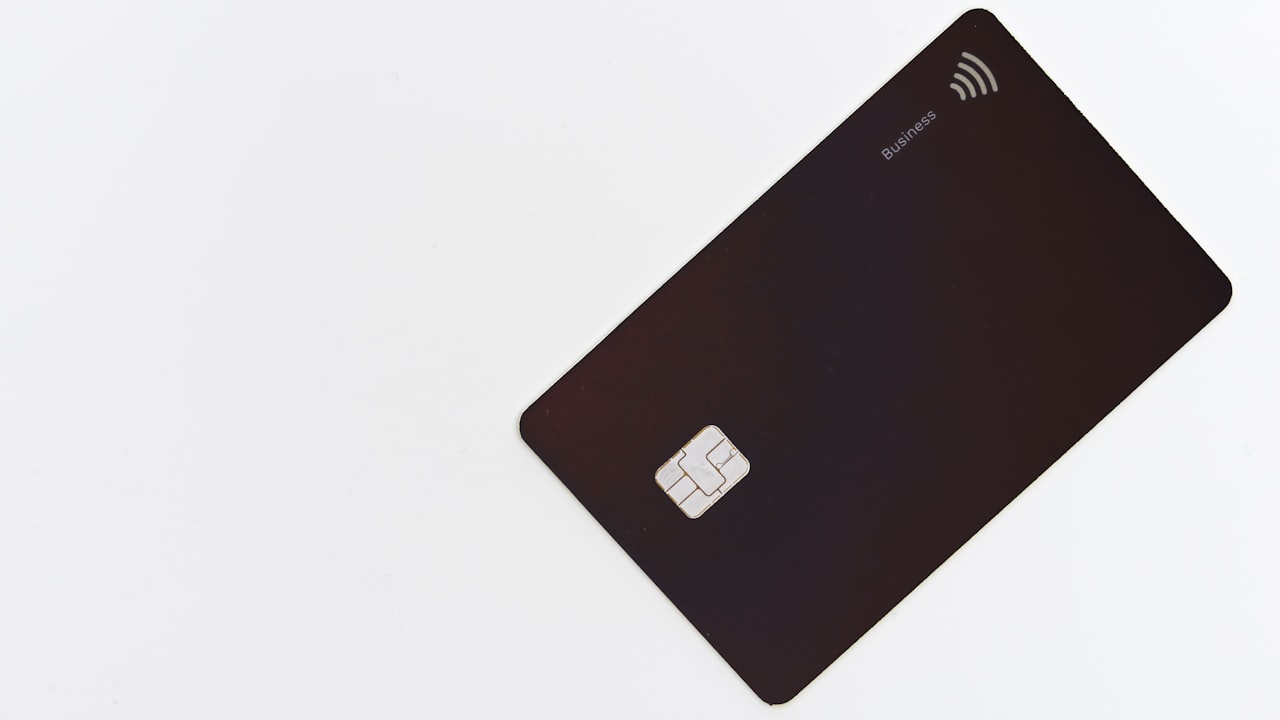
What Is a Crypto Card?
A crypto card is a payment card connected to a blockchain wallet instead of a traditional bank account. When you swipe, tap, or pay online at checkout, your cryptocurrency is converted to fiat currency (USD, EUR, etc.) in real time, and the merchant receives payment just like they would from any Visa card.
Signal: Crypto cards have processed over $18 billion in transaction volume annually by 2026, and Visa now handles 97% of all crypto-card payments globally. This level of institutional support signals the infrastructure is mature and widely accepted.
The key distinction from traditional banking: crypto cards eliminate the intermediate step of converting your digital assets on a centralized exchange. Instead, conversion happens automatically at the payment terminal, removing friction and fees.
Most crypto cards today are either non-custodial (you hold your private keys) or custodial (the card issuer holds them). Non-custodial appeals to self-custody advocates; custodial appeals to users who want traditional customer support and insurance protection.
What Is a Crypto Debit Card?
A crypto debit card is a specific type of crypto card where funds are debited immediately from your wallet when you spend. This contrasts with credit models (where you’d repay a lender later) or hybrid models (where crypto is locked as collateral and you borrow fiat against it).
Risk: Some issuers use hybrid models where you pledge crypto as collateral to unlock a credit line. These add counterparty risk—always verify the settlement mechanism before signing up.
In 2026, the vast majority of crypto cards operate on a pure debit model:
- Immediate settlement — Your crypto converts and reaches the merchant within seconds
- No credit line — You cannot spend more than your wallet balance
- Irreversible — Unlike credit cards, debit transactions cannot be reversed (though some issuers offer purchase protection)
- KYC-gated — Like traditional debit cards, crypto debit cards require identity verification for AML compliance
Why it matters: The debit model is simpler for regulators (no credit-transmission licensing), which is why every major crypto card (ether.fi, Crypto.com, RedotPay, Cypher) uses the debit structure. It’s also faster—debit settlement takes seconds, not days.
Understanding Multi-Chain Crypto Cards
“Multi-chain” means the card can draw cryptocurrency from multiple blockchain networks—Ethereum mainnet, Polygon, Arbitrum, Optimism, and others—without requiring you to manually bridge tokens or swap between networks.
Key metric: Ether.fi Cash currently supports Ethereum and Scroll; the most advanced multi-chain options support 3–8 networks today. By contract volume, RedotPay leads the non-custodial crypto-card market at 80.7% share.
Why multi-chain matters:
- No bridge friction — Spend USDC from Polygon directly; don’t bridge to Ethereum first and pay a fee
- Cost savings — Avoid bridge fees (0.1–0.5% per transfer) and liquidity slippage
- Portfolio flexibility — Hold different assets on different chains without consolidation overhead
- Staking alignment — Keep ETH earning 3%+ APY on Ethereum while spending from another network’s balance
Example scenario: You hold 10 ETH earning staking rewards on Ethereum, and 1,000 USDC on Polygon. A multi-chain card routes your payment to whichever network has the best fee or liquidity at that moment—if Polygon is cheaper, it uses USDC; if you need privacy, it can use ETH from mainnet.
Watch: Regulatory bodies (EU MiCA, US FinCEN, UK FCA) are tightening reporting requirements on cross-chain transactions. By 2027, multi-chain cards may need to log each network interaction for tax reporting. Verify your card issuer’s compliance roadmap today.
Compare leading crypto cards side-by-side to understand network coverage differences.
Benefits and Real-World Advantages
Multi-chain crypto cards unlock advantages that traditional debit cards and single-network crypto cards cannot:
Yield while spending — The primary benefit: your cryptographic assets can continue earning staking rewards or DeFi yield while you spend from a paired wallet or alternate chain. You’re not forced to unlock or liquidate your long-term holdings to pay for everyday expenses.
Self-custody with Visa convenience — Non-custodial multi-chain cards keep private keys in your wallet, giving you censorship resistance and control. You get worldwide merchant acceptance without sacrificing self-sovereignty principles.
Zero FX fees on major pairs — Ether.fi Cash and most competitors charge 0% foreign-exchange markup on USD and EUR conversions. This saves 3–4% compared to traditional bank cards—a huge advantage for travelers and international payments.
Instant settlement — No 3–5 business day clearing window. Crypto settlement is atomic: either the transaction completes in seconds or fails immediately. No floating balances or pending holds.
Real cost comparison: Traditional bank debit card abroad incurs 3–4% FX markup plus $5–10 ATM fees. A crypto card abroad charges 0% FX (USD/EUR), 1% FX (other pairs), and 2% ATM fees. The multi-chain advantage: you can route through the cheapest network path, often reducing total costs further.
Use Cases Across Profiles
Traveling with staked ETH: A Canadian eth2 staker holds 5 ETH on Ethereum earning 3.2% APY. Instead of unstaking (losing yield), they transfer a portion to Scroll and use a Scroll-compatible multi-chain card. They spend in euros at Paris restaurants with 0% FX fees while their main holdings continue earning.
Freelancer with multi-chain income: A protocol developer earns USDC on Optimism, USDT on Polygon, and ETH on Ethereum. Instead of aggregating on a single chain (paying bridge fees), a multi-chain card lets them spend from whichever balance is most convenient. They also reduce tax-accounting complexity by avoiding intermediate swaps.
DeFi yield farmer: A farmer earning LP tokens on Uniswap, Balancer, and Curve doesn’t want to liquidate long-term positions for living expenses. A multi-chain card provides flexible spending access without forced liquidation.
DAO or corporate treasury: A blockchain-native company holds stablecoins across multiple networks for redundancy and liquidity. Employees use a multi-chain card for travel and operations; the DAO pays in its preferred network. Learn more about how crypto cards work for treasury management.
What to Watch
- MiCA compliance tightening (EU) — The Markets in Crypto-Assets Regulation now requires explicit issuer authorization. Cards that cut regulatory corners may lose Visa rails by mid-2027. Verify your issuer holds an EU CAS license.
- Network expansion — Cards supporting 3–4 networks today will likely support 8–12 by Q4 2026. Follow your card issuer’s roadmap for new integrations.
- Fee structure changes — Some issuers are adding transaction fees on low-volume users. Review fee schedules quarterly and switch if rates climb.
- Cross-chain bridge security — Bridge exploits have cost the industry $100M+; watch for ZK bridge and light-client security improvements.
- Tax automation — IRS and HMRC are targeting crypto-spending events. Expect your card issuer to offer automated 1099/SA302 exports by 2027.
Bottom Line
A multi-chain crypto card is a payment card connected to your blockchain wallets across multiple networks, letting you spend cryptocurrency directly at any Visa merchant without converting to fiat first.
- If you earn crypto across multiple chains (Ethereum, Polygon, Arbitrum) and want to avoid bridge fees and slippage, a multi-chain card eliminates friction. You can spend from whichever network offers the best liquidity at that moment.
- If you’re a long-term staker or yield farmer, a crypto card lets you maintain your positions and rewards while funding daily expenses. Your yield stays intact; you don’t liquidate.
- If you travel internationally, the 0% FX markup on USD and EUR saves hundreds of dollars per trip compared to traditional bank cards. Multi-chain options expand your spending flexibility even further.
- If you value self-custody, a non-custodial multi-chain card keeps your private keys in your wallet while delivering Visa acceptance worldwide. Get started with ether.fi Cash for Ethereum and Scroll support, or compare top-tier options to find your fit.
Frequently Asked Questions
Q: Is a crypto card the same as a Bitcoin debit card? A: Not exactly. A Bitcoin debit card connects specifically to Bitcoin holdings; a crypto card can connect to Ethereum, stablecoins, altcoins, or a mix. Multi-chain cards support multiple assets and networks, while Bitcoin-only cards support only BTC.
Q: Do I need to be a crypto expert to use a crypto card? A: No. If you can use a traditional debit card, you can use a crypto card. You tap, insert, or pay online exactly as usual. The card handles the crypto-to-fiat conversion invisibly in the background.
Q: What happens if the cryptocurrency price drops between my transaction and settlement? A: The conversion rate is locked at the moment you swipe or tap. If crypto prices drop afterward, you’re not affected—you already paid a fixed fiat amount. If prices rise, you don’t benefit from that upside (the merchant received fiat, not crypto).
Q: Can I earn rewards or cashback on a crypto card? A: Yes. Most crypto cards offer cashback rewards (1–3% on base spending). Rewards are paid in the card’s native token or cryptocurrency.
Q: What countries can use multi-chain crypto cards? A: Availability varies by issuer. Ether.fi Cash is available in 76+ countries for physical card issuance but has restrictions in 20 countries (Russia, China, India, Venezuela, North Korea, Belarus, and others). Always verify your country on the issuer’s official site before signing up or review country-specific options.
Q: How is a crypto card secured? A: Non-custodial crypto cards secure assets through your wallet’s private-key security—they’re as safe as your wallet security practices. Custodial cards shift security to the issuer (typically insured up to $250k). Both require KYC/AML verification like traditional payment cards.