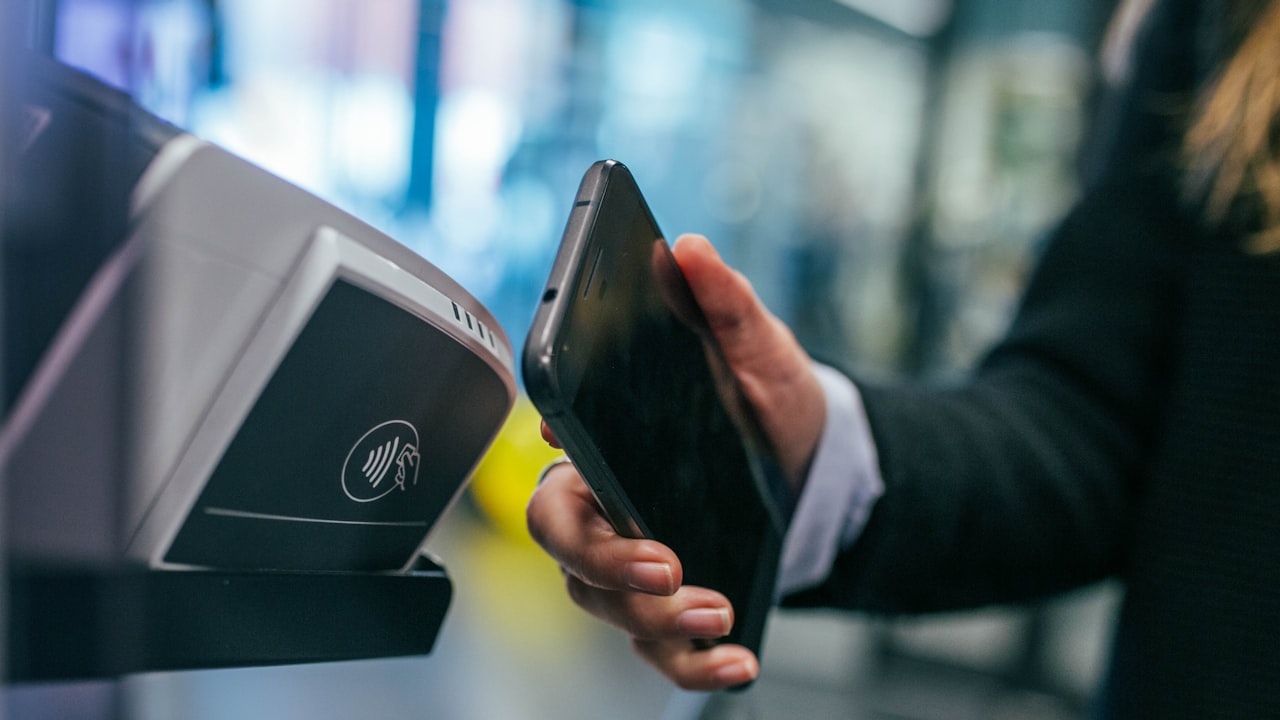
How Apple Pay Works
Apple Pay is a custodial payment network operated by Apple. When you add a card to Apple Pay, Apple and your card issuer hold the actual funds. You tap your device at a reader; the transaction settles through traditional payment rails (Visa or Mastercard). No blockchain involved.
Signal: Apple Pay is ideal for people deeply integrated into the Apple ecosystem who want the fastest tap-to-pay experience.
Apple Pay’s main advantage is ubiquity in the US and EU. It works everywhere Visa/Mastercard are accepted. Disadvantages: you’re locked into Apple devices, can’t earn rewards on crypto, and you’re trusting a centralized company with your spending data.
What Is a Crypto Card?
A crypto card lets you spend cryptocurrency directly—no forced conversion to fiat first. The most popular non-custodial option is the ether.fi Cash card, which lets you spend ETH or other crypto while keeping your keys.
Key metric: ether.fi Cash offers up to 3 % cashback on all spending, paid in ETH or stablecoins. Promo rates go **.
Unlike Apple Pay, crypto cards settle through crypto rails (often Ethereum or Scroll) and then settle to fiat via Visa rails at point of sale. This means faster global settlement, lower intermediary fees, and—critically—you retain custody of your assets until the moment of spend.
Sign up for ether.fi Cash to compare the experience. Many users find crypto cards particularly valuable when comparing crypto card vs paypal, since PayPal is semi-custodial and doesn’t let you earn crypto rewards.
Custody: The Core Difference
This is the fundamental split.
Apple Pay: Custodial. Apple and your card issuer hold the actual USD/EUR. You’re trusting both to keep your balance secure, honor your access, and not freeze your account without recourse.
Crypto card (ether.fi example): Non-custodial. You hold the private keys to your crypto wallet. When you swipe, you’re authorizing a spend directly from your wallet. The issuer never holds your funds—they just route the transaction and settle fiat on the merchant side.
Why it matters: Non-custody means you’re in control. Your funds can’t be frozen by a corporation. But it also means you’re responsible for backing up your keys and managing wallet security.
Comparing Fees and Cashback Rewards
Cashback:
- Apple Pay: Issuer-dependent, typically 1–2 % in fiat
- ether.fi Cash: Up to 3 % in crypto
FX Fees:
- Apple Pay: 1–3 % (varies by issuer)
- ether.fi Cash: 0 % on USD/EUR, 1 % on all other currencies
ATM Withdrawal:
- Apple Pay: Varies by issuer
- ether.fi Cash: 2 % fee
Annual fee:
- Apple Pay: Usually none (depends on card)
- ether.fi Cash: None
Key metric: If you spend internationally, ether.fi’s 0 % FX on USD/EUR can save 1–3 % per transaction—meaningful for frequent travelers.
When comparing crypto card vs paypal, note that PayPal offers no crypto rewards and charges 2–3 % on international transfers. Crypto cards tend to offer lower costs overall.
When comparing crypto card vs bank transfer, bank transfers take 1–3 days and cost $10–50+. Crypto cards settle in seconds for card spending (ATM withdrawal is 2 %).
Risk: Crypto rewards volatility. If ETH drops 20 % after you receive 3 % cashback in ETH, your reward is worth less. Apple Pay’s fiat cashback is stable.
Global Availability and Geography
Apple Pay:
- Works in approximately 75 countries
- Requires: Apple device ecosystem (iPhone, Watch, etc.)
- Restricted: China, Russia, some MENA regions
ether.fi Cash:
- Works in 76 countries, no device lock-in
- Not available: Belarus, Bangladesh, China, Cuba, Estonia, Finland, India, Iraq, Israel, Nepal, Netherlands, North Korea, Philippines, Russia, Syria, Turkey, Ukraine, Venezuela, Vietnam
- US states not available: Arizona, Delaware, Georgia, Idaho, Louisiana, Maryland, Mississippi, Missouri, Montana, Nevada, New Mexico, North Dakota, Ohio, Oregon, Rhode Island, South Dakota, Tennessee, Vermont, Washington, Wisconsin
- Advantage: If you’re outside the Apple ecosystem or in a region where Apple Pay is weak, crypto cards often work
Signal: Crypto cards don’t require any specific device—just a smartphone with internet. That’s a significant win for Android users or travelers in emerging markets where Apple penetration is low.
Speed and Settlement
Apple Pay:
- Real-time authorization at point of sale
- Settlement: 1–3 days (behind the scenes)
- Works anywhere Visa/Mastercard is accepted
Crypto cards (ether.fi):
- Real-time authorization at point of sale
- Settlement: Crypto-to-fiat happens at card issuer (instant), then fiat settles with merchant (1–3 days)
- Works anywhere Visa is accepted (same rails as Apple Pay)
Why it matters: Both are instant at checkout. In crypto card vs bank transfer scenarios, crypto cards are dramatically faster—bank transfers take 1–3 days. The difference with Apple Pay is settlement transparency: Apple Pay uses traditional banking (slower, opaque), while crypto cards use blockchain (faster, transparent).
Using Both: A Hybrid Strategy
You don’t have to choose. Many crypto users keep both:
- Apple Pay: Everyday USD/EUR spending, grocery stores, small vendors
- Crypto card (ether.fi): DeFi spending, staking-account funding, crypto-to-fiat conversion, earning 3 % cashback in your favorite token
Why it matters: A hybrid approach lets you avoid portfolio churn. Instead of selling ETH to USD to spend (tax event), you spend directly with the ether.fi card and earn cashback in ETH. Your portfolio stays compounded.
Key metric: If you earn $1,000/month in staking yield and spend half of it ($500) via a crypto card at 3 % cashback, you gain an extra $15/month (or $180/year) in rewards—just from choosing the right payment method.
Compare ether.fi Cash options to see which fits your spending profile.
When to Use Each
Use Apple Pay if:
- You’re deeply integrated into iOS (iPhone, Watch, Mac)
- You want the simplest, fastest tap-to-pay
- You don’t hold significant crypto
- You prioritize reward stability (fiat cashback)
Use a crypto card (ether.fi) if:
- You hold staking rewards or earn crypto income
- You travel internationally (0 % FX on USD/EUR)
- You want to keep your portfolio intact (no forced sells)
- You care about non-custodial control
- You value earning crypto rewards instead of fiat
What to Watch
- Regulatory shifts: UK FCA and EU MiCA rules may expand or restrict crypto-card eligibility. Verify your region’s status annually.
- ether.fi tier expansions: Watch for monthly-limit changes or new perks affecting your spending profile.
- Fee compression: As competition heats up, FX fees and ATM fees may drop. Review options yearly.
- Staking income milestones: If your crypto income crosses $2,000/month, crypto-card ROI shifts sharply (rewards compound faster).
- Apple evolution: Monitor for any Apple Card updates or new features.
Bottom Line
- If you fit the iOS-native profile: Apple Pay is excellent for everyday convenience. Stick with it for 90 % of small transactions.
- If you fit the crypto-native profile: ether.fi Cash and similar crypto cards pay you back on your holdings. Earn up to 3 % cashback, 0 % FX on majors.
- If you fit the hybrid profile: Use both strategically. Apple Pay for fiat spending; crypto card for portfolio-aware spending. You’ll optimize convenience and earnings.
Next step: Try ether.fi Cash and experience the difference. Most crypto users find they rely on both depending on context.
Risk and Disclosure
FTC Disclosure (repeated): DefyCard publishes affiliate-linked comparisons; we may earn a commission when you sign up for ether.fi Cash through our links. This does not affect your price or any fees you may owe.
Crypto volatility: If you earn cashback in ETH or other tokens, the reward’s fiat value can drop 20–30 % in a week. Consider your risk tolerance before choosing crypto rewards over stable-value cashback.
Geographic restrictions: ether.fi Cash is not available in all countries or US states. Verify eligibility at ether.fi’s help center before signing up. Apple Pay is broadly available but has its own regional restrictions.
Not financial advice: This article compares payment methods, not investment strategies. Consult a tax professional before using crypto cards for large transactions (tax implications may apply).