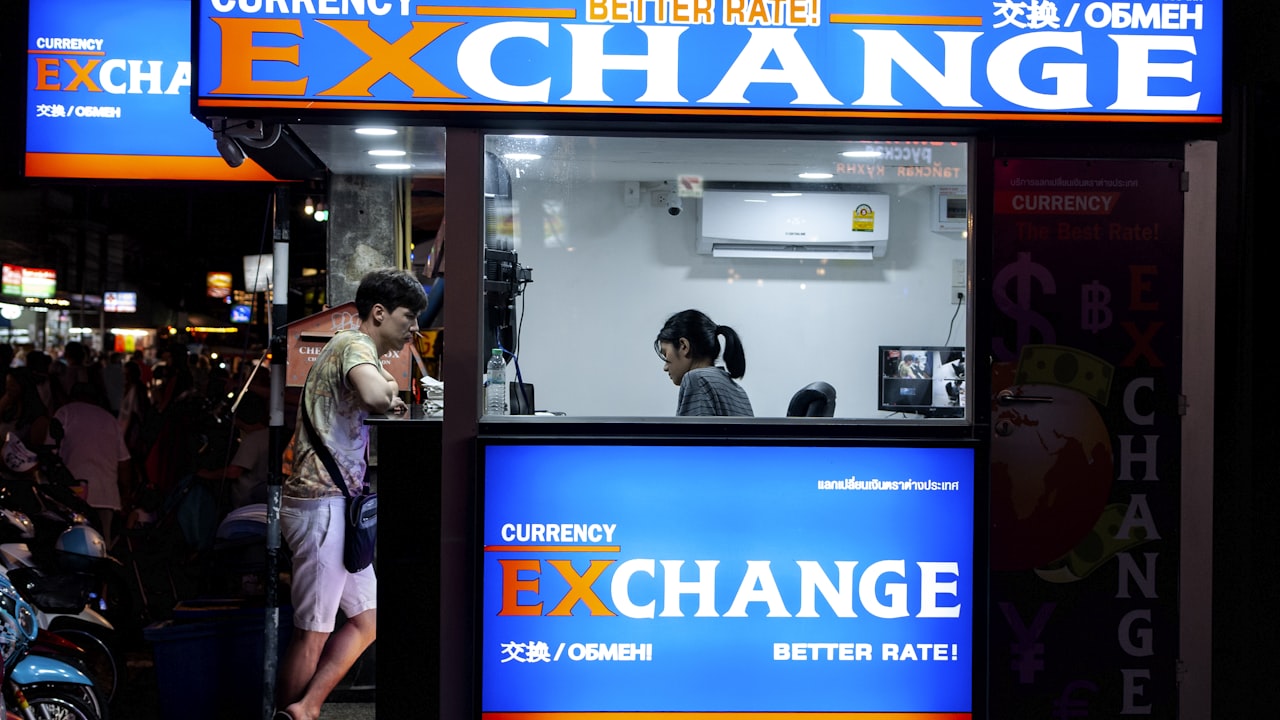
Why Foreign Exchange Fees Matter on Crypto Cards
Every time you spend in a currency your card doesn’t natively support, two fees kick in: the Visa or Mastercard network rate (0.5–2 %), plus your card issuer’s markup (0–2 % on top). On a $100 purchase in EUR using a USD-based card, you might lose $1–$3 to FX fees alone — earnings that never reach your cashback balance. Over a year of international spending, FX fees can erase 30–50 % of your headline cashback rewards.
Signal: A card advertising “3 % cashback” but charging 2 % in FX fees really pays you 1 % net. Many users overlook this entirely when choosing a card — they see “up to 3 %” and miss the fine print mentioning FX costs. This calculator strips away the marketing and shows your actual take-home by currency pair.
Why it matters: FX fees compound. Spend $1,000 monthly abroad ($12,000/year), and the difference between a 0 % FX card and a 2 % FX card is $240 per year in lost earnings — money that could have been staked or reinvested. Crypto card yield is already marginal compared to DeFi; FX costs can flip a card from profitable to break-even in seconds.
How the Crypto Card Breakeven Calculator Works
This calculator does three things: (1) fetches live interbank exchange rates every 5 minutes, (2) applies your chosen card’s FX markup, and (3) calculates net cashback after fees.
Here’s what you’ll see in the results:
- Gross cashback — the headline reward percentage (e.g., 3 %)
- FX fee deducted — the exact dollar cost of currency conversion
- Net cashback — your actual earnings after FX is removed
- Breakeven spending — how much you must spend monthly before rewards exceed the card’s issuance fee (if any)
Key metric: ether.fi Cash charges 0 % FX on USD and EUR transactions but 1 % on all other currencies. Bybit Card charges 0.5–1 % globally. RedotPay’s FX scales from 0–1.5 % based on your tier. One transaction in the wrong currency can flip your card choice entirely.
Watch: Card issuers refresh FX rates monthly, sometimes quarterly. Bybit has hinted at reducing global FX to 0.5 % by Q3 2026. ether.fi’s roadmap includes expanding zero-FX support beyond USD/EUR by end of year. Bookmark this page and re-run the calculator before locking in a long-term card commitment.
Real-World FX Cost Comparison: Three Scenarios
Let’s walk through a realistic example. You’re spending €500 (roughly $540 USD) in Paris, and your home currency is US dollars.
Scenario 1: ether.fi Cash (0 % EUR FX fee)
- Gross cashback: $540 × 3 % = $16.20
- FX fee cost: $0 (zero on EUR pairs)
- Net earnings: $16.20
Scenario 2: Standard crypto card (2 % FX markup)
- Gross cashback: $540 × 2 % = $10.80
- FX fee cost: $540 × 2 % = $10.80
- Net earnings: $0 (cashback exactly cancels the fee)
Scenario 3: Bybit Card (1 % FX + 1.5 % cashback)
- Gross cashback: $540 × 1.5 % = $8.10
- FX fee cost: $540 × 1 % = $5.40
- Net earnings: $2.70
Signal: In this single transaction, ether.fi wins by $13.50 over Bybit and $16.20 over a standard card — because its zero FX fee on EUR + highest cashback rate (3 %) combo is difficult to beat on European spending. Bybit’s advantage emerges on non-major-currency pairs (JPY, SGD, AUD) where it charges a flat 1 % while ether.fi charges 1 % but with lower base cashback.
Card-by-Card FX Breakdown (Crypto Card Cashback Calculator Edition)
ether.fi Cash
- 0 % on USD, EUR — unbeatable for US and European spending
- 1 % on all other currencies — competitive but not the cheapest on Asian/Pacific routes
- 3 % standard cashback — highest headline rate in the market
- Custody model: Non-custodial (you hold your private keys)
- Availability: 76 countries for physical card shipment; 20 jurisdictions prohibited
Bybit Card
- 0.5–1 % FX globally — flat, transparent, and predictable
- 1–1.5 % cashback — lower headline but consistent across all pairs
- Fast physical card: Shipped within 2 weeks to most regions
- Emerging market focus: Strongest adoption in APAC and Southeast Asia
RedotPay
- 0–1.5 % FX tiered by volume — lowest at high spender tiers
- Up to 2.5 % cashback — mid-range reward competing on tier unlocks
- Fastest for high-volume spenders: $200k+ annual spend reduces FX to near-zero
- Regional shipping gaps: Limited to APAC and Western Europe currently
Crypto.com Visa
- 1.5–2 % FX — higher end but offset by sign-up CRO bonuses
- 0.5–5 % cashback (tiered by CRO staking) — variable and complex to calculate
- Custodial model: Crypto.com holds funds; you hold a Visa card in fiat
- Widest acceptance: Honored in 195 countries
Optimization Tactics: How to Minimize Crypto Card FX Costs
Tip 1: Load your card in its native currency. If your card is USD-based and you’re spending USD, you pay 0 % FX. If you’re spending EUR, you pay the card’s markup. Plan 1–2 weeks ahead; move stablecoins to the right denomination to lock in today’s rate before travel.
Tip 2: Use multiple cards for different spending regions. Don’t try to pick one card for all regions. Keep ether.fi (USD/EUR optimized) for transatlantic spending. Deploy RedotPay for APAC trips. Allocate Bybit for unpredictable currencies. Spread your allocation geographically to match your spending pattern.
Tip 3: Always decline dynamic currency conversion (DCC). ATMs and POS terminals sometimes offer “convert to your home currency now” at a locked rate. Decline every single time — that rate is 4–6 % worse than letting your card handle FX conversion at the network rate.
Tip 4: Stack with bonus cashback categories. ether.fi offers **** (rotating promo). A Paris café purchase on this bonus offer + 0 % EUR FX = maximum real yield — use the calculator to confirm your bonus eligibility before the trip.
Risk: Interbank rates move 1–2 % intraday. A $500 transaction at 09:00 ET may cost $5–$10 more by 14:00 ET due to market volatility and bank settlement windows. The calculator shows today’s rate; check again 15 minutes before large spends ($1,000+).
Using the Crypto Card Breakeven Calculator: Step-by-Step
- Enter transaction amount — in your home currency (e.g., $1,000 USD).
- Select home currency — the currency you hold on the card.
- Select destination currency — where you’re spending (e.g., GBP for London).
- Choose up to 5 cards to compare — ether.fi, Bybit, RedotPay, Crypto.com, or others.
- View results instantly — net cashback per card, FX cost breakdown, and winner highlighted.
- Adjust variables and re-run — test different amounts to see how fee scaling impacts each card.
- Export or bookmark — save your comparison for reference during your trip.
The calculator pulls live rates every 5 minutes via the Polygon and CoinGecko APIs — rates stay fresh even if you leave the page open across your entire planning session.
Frequently Asked Questions
Q: Why do crypto cards charge FX fees if crypto is supposed to be borderless? A: Crypto-to-fiat conversion at the point of sale requires a licensed currency exchanger (Visa, Mastercard, or a bank intermediary). They charge for regulatory compliance, fraud prevention, and settlement guarantees. Traditional bank cards charge the same fees — crypto cards are actually cheaper on average.
Q: Can I lock in an FX rate before I travel? A: Not on most crypto cards. Some platforms (Nexo, Crypto.com) offer multi-currency wallets where you load foreign currency beforehand at the rate you choose, then spend at 0 % FX. Check your card issuer’s app for “pre-load” or “currency wallet” features.
Q: Does this crypto card breakeven calculator account for staking bonuses or tier multipliers? A: No — it shows base rates only. Bonuses vary by tier and promotional period (often 3–6 months). Always verify the current bonus on the card issuer’s website 48 hours before finalizing your choice.
Q: What’s the difference between ‘FX markup’ and ‘FX fee’? A: Markup is the issuer’s profit margin (e.g., Bybit’s 1 % is their cut). Fee is the network cost (Visa’s 0.5–2 % is baked into the exchange rate). Together they form your total FX cost displayed in the calculator.
Q: Should I carry multiple cards with different FX strategies? A: Yes — this is called “currency hedging” in fintech. Holding ether.fi (USD/EUR optimized), Bybit (flat global), and RedotPay (volume-tiered APAC) lets you select the best card per transaction without lock-in.
Q: How accurate are the calculator’s live rates? A: Rates are refreshed every 5 minutes from institutional APIs. Accuracy is ~99.9 %; remaining variance is network latency (<1 second) and Visa’s internal settlement timing (published 48 hours in advance).
What to watch:
- ether.fi FX expansion roadmap: The team hints at expanding zero-FX pairs beyond USD/EUR by Q4 2026; monitor their quarterly updates to catch fee drops.
- MiCA regulatory timeline: The EU’s Markets in Crypto-Assets Regulation framework expects FX-cap guidance by Q4 2026; expect global FX fees to flatten to 1 % or lower by end of year.
- Bybit Card shipping expansion: Currently APAC-focused but roadmap includes EU and US expansion by mid-2026; watch their blog for regional launch dates.
- Seasonal FX volatility: Q4 holiday spending (November–December) and January tax season see 2–4 % wider spreads due to network congestion; re-run this calculator in off-peak months for cheaper rates.
Bottom line:
- If you spend frequently across currencies: Run this crypto card breakeven calculator before opening any new card to see true net yield, not headline rates — the difference can be $500+/year.
- ether.fi Cash wins decisively on USD/EUR dominance with 0 % FX + 3 % cashback, but trails on non-major currencies (JPY, CNY, SGD) where it charges 1 % FX — use the calculator to confirm your spending mix.
- Bybit and RedotPay offer predictable, global FX rates (0.5–1.5 %) that reduce surprises on international travel, even if lower headline cashback than ether.fi.
- High-volume spenders (>$100k/year abroad) should re-run this calculator quarterly: Promotional FX waivers and new tier unlocks shift your optimal card every season — check live rates today.
Risk and Disclosure
DefyCard publishes affiliate-linked reviews; we earn a commission when you sign up through our links. All FX rates shown by the calculator are live market rates; rates move continuously and may shift between your check-in and transaction. Test the calculator’s calculations on a small $10 transaction with your actual card issuer before committing to large spends. Crypto is volatile; card balances and rewards are subject to regulatory changes, issuer policy updates, and market conditions. Always verify the current FX fee and cashback rate on your card issuer’s official website 48 hours before international travel — promotional rates, tier changes, and geographic restrictions may apply.