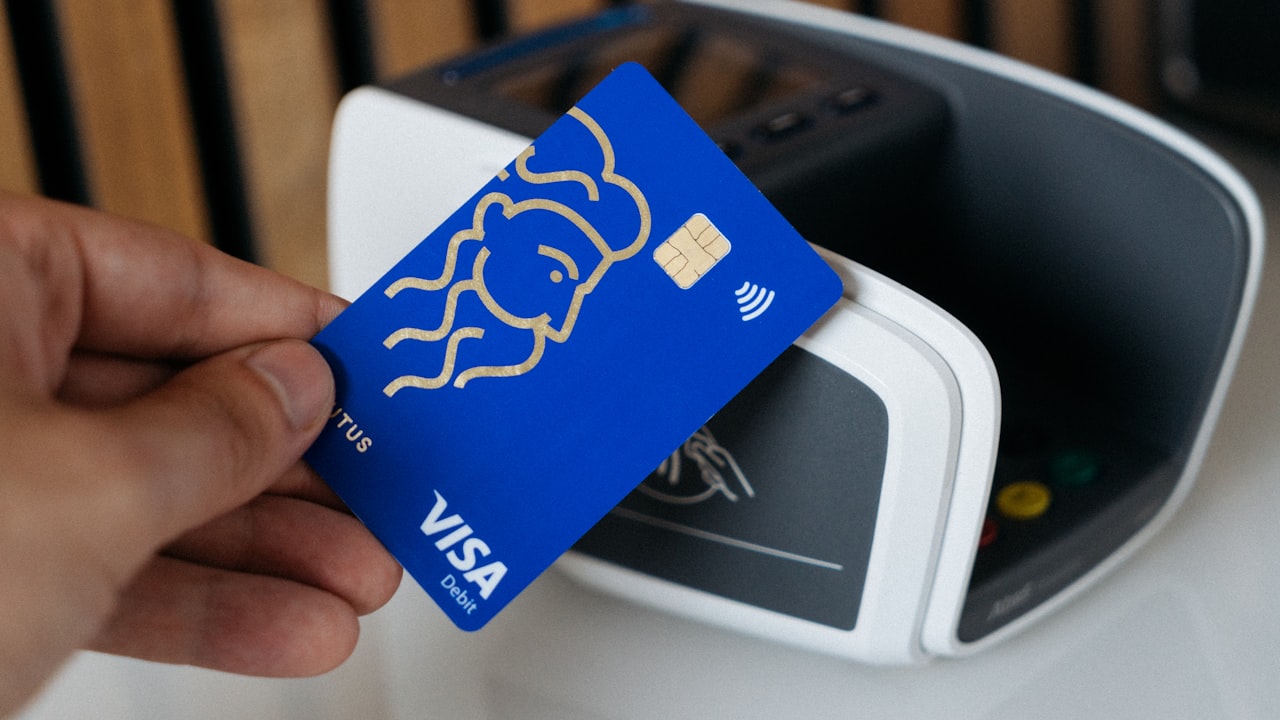
What is Coinbase Card?
Coinbase Card is a Visa debit card that lets holders spend cryptocurrency held in their Coinbase account directly at merchants. Instead of converting crypto to fiat, you maintain holdings and spend natively.
Signal: Ideal if you already store crypto on Coinbase and want a frictionless card without moving funds off-platform.
Risk: Custodial storage means Coinbase holds your keys — you’re not in self-custody during the spend flow.
Spending experience and currencies
Coinbase Card primarily supports USDC (USD Coin) as the spending currency, with optional Ethereum and other crypto holdings. Transactions settle instantly from your balance, and Coinbase handles the conversion to merchant fiat at transaction time.
Key metric: The virtual card activates immediately; physical cards take 7–10 business days to arrive.
Mobile integration is tight — you manage spends directly in the Coinbase app alongside your portfolio. This differs from non-custodial cards like ether.fi Cash, where you manage self-custody wallets separately.
Why it matters: Convenience comes at the cost of self-custody. If your security model requires non-custodial holdings, Coinbase Card may not fit.
Cashback and rewards breakdown
Coinbase offers cashback on card spend, though exact rates vary by region, account tier, and promotional periods. Current rates are best verified directly on Coinbase’s site, as they update regularly.
Watch: Coinbase has historically adjusted cashback rates seasonally. If maximizing rewards is your priority, subscribe to their card announcements.
Alternative: ether.fi Cash advertises up to 3 % cashback on the first band of monthly spend, stepping down to 1 % and then 0.5 %. Compare the effective return on your typical spending pattern.
Fees and costs
Virtual Coinbase Card: free.
Physical card: $10 one-time fee. Some fiat-backed crypto cards waive this for high-balance holders; check if Coinbase offers similar benefits.
Foreign exchange: When spending USDC from a USD-denominated balance, there is 0 % FX markup. Non-USD currencies (EUR, GBP, etc.) are subject to Coinbase’s standard conversion rates at transaction time.
ATM withdrawals: Coinbase charges a 2 % fee for ATM cash withdrawals (typical for crypto cards).
Key metric: The physical card $10 cost is lower than many competing cards (Bybit Card, traditional Visa debit cards), making it accessible for casual spenders.
Risk: ATM fees and crypto-to-fiat conversion rates can compound. Always check rates before withdrawing.
Country availability and restrictions
Coinbase Card is available in the US and select European countries. Exact eligibility depends on:
- Your country of residence.
- Local regulation and Coinbase’s licensing status.
- Compliance with Coinbase’s onboarding KYC requirements.
Watch: Geographic availability is expanding but remains fragmented. If your country isn’t listed, check Coinbase’s official support page or contact their team.
Alternative: If Coinbase doesn’t serve your region, non-custodial cards (ether.fi Cash available in 40+ countries including UK, EU, LATAM) may be an option. Verify ether.fi’s current country list before applying.
Coinbase Card vs. competitors
vs. ether.fi Cash
| Factor | Coinbase Card | ether.fi Cash | | Custody | Custodial (Coinbase holds keys) | Non-custodial (self-custody) | | Cashback | Varies by region | Up to 3 % standard, 15 % promo | | Staking / yield | None | Positions “yield while spending” | | Spending currencies | USDC, ETH, others | USDC, Ethereum via Scroll network | | Affiliate commission | 50 % trading fees, first 3 months | 1 % of referee spend, 12 months |
Signal: Choose Coinbase if you prioritize simplicity and already use the exchange. Choose ether.fi if you want self-custody + yield positioning.
vs. Bybit Card
Bybit Card targets active traders with earning potential (up to 30–50 % rev share depending on tier). Coinbase Card is more retail-focused with straightforward cashback.
Key metric: Bybit requires approval; Coinbase is faster to activate.
Security and custody considerations
Coinbase is a regulated exchange (US-licensed Money Transmitter). Your crypto is insured against hacks up to $250,000 USD equivalent under Coinbase’s policy — check current terms on their site.
However, if you hold crypto for long-term conviction, storing it on an exchange for spending convenience means you are not in self-custody. Some users mitigate this by:
- Moving only the amount you intend to spend to Coinbase.
- Keeping the majority of your holdings in a self-custody wallet.
- Considering non-custodial cards (like ether.fi) for core holdings.
Risk: Exchange outages, regulatory action, or internal failures could disrupt access to your card balance. This is a known trade-off of custodial cards.
What to watch
- Cashback rate updates: Coinbase adjusts rewards periodically; monitor their blog for changes.
- Country expansion: Coinbase regularly adds countries; recheck availability annually.
- KYC evolution: Regulatory changes may alter onboarding timelines or eligibility.
- Competitive feature launches: Other cards (ether.fi, Bybit, RedotPay) are adding features rapidly — compare annually.
- Physical card shipping: 7–10 days is standard, but delays can occur during high-demand periods.
Bottom line
- If you’re a Coinbase user: Coinbase Card is a natural extension of your existing account, with no additional KYC.
- If you want self-custody + yield: ether.fi Cash [
](https://www.ether.fi/@defycard) positions “yield while spending” with a 3 % standard cashback rate — verify the exact mechanics on their site.
- If you prioritize simplicity over maximizing rewards: Coinbase Card is straightforward; if you want higher earning potential, Bybit or RedotPay may yield more on high spend volumes.
- If you’re new to crypto cards: Coinbase Card is a lower-risk entry point since you’re already using the exchange.
Frequently asked questions
Q: What cryptocurrencies can I spend with Coinbase Card? A: Primarily USDC, with support for Ethereum and other holdings in your Coinbase account. Verify current supported assets on Coinbase’s card page.
Q: Is there a monthly fee for Coinbase Card? A: No recurring monthly fee. You pay $10 for a physical card (one-time) and 2 % ATM fees. Virtual is free.
Q: How fast can I start spending after applying? A: Virtual card is available immediately after approval (usually same day). Physical card arrives in 7–10 business days.
Q: Does Coinbase Card support rewards programs (airline miles, etc.)? A: Coinbase offers cashback in crypto; traditional rewards programs are not available. Check Coinbase’s current cashback structure.
Q: Can I lose my crypto if the Coinbase Card is compromised? A: Visa disputes typically protect against fraudulent transactions. Your card balance is insured under Coinbase’s custody insurance (up to $250k equivalent). However, this does not protect against account compromise if your Coinbase password is stolen — use 2FA.
Q: How does Coinbase Card compare to ether.fi Cash for yield? A: Coinbase offers cashback; ether.fi positions “yield while spending.” Visit ether.fi’s site to understand their exact yield mechanism and compare to Coinbase’s current cashback rate.
Risk and disclosure
FTC disclosure: DefyCard earns affiliate commissions when you sign up through our links. This does not affect card pricing or your terms with any issuer.
Cryptocurrency volatility: Coinbase Card spends from crypto holdings. The value of your balance fluctuates; if you’re holding Ethereum or other volatile assets, conversion rates at transaction time determine your actual spend. Do not assume a fixed purchasing power.
Custodial risk: Unlike self-custody wallets, your balance is held by Coinbase. Regulatory action, account suspension, or internal failure could disrupt access. Use Coinbase Card for spending, not for long-term holdings.
Geographic restrictions: Coinbase Card and affiliate programs are not available in all countries. If you live in a restricted region, you will not qualify. Check Coinbase’s official eligibility list for your country before applying.