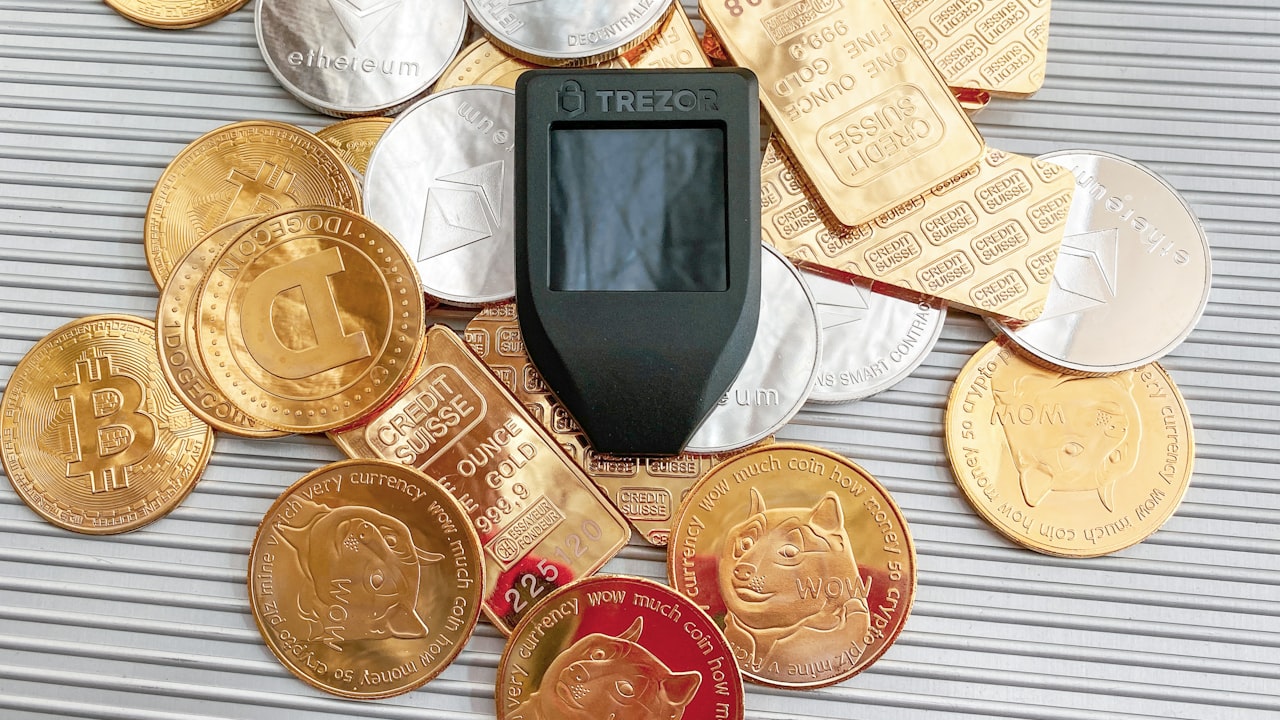
What is a Non-Custodial Crypto Card?
A non-custodial crypto card is a debit card that draws funds directly from a cryptocurrency wallet you control. The card issuer does not hold your private keys or your assets — you do. When you swipe the card, a stablecoin (like USDC on Ethereum or Scroll) is instantly converted to local currency and processed through Visa or Mastercard rails.
This contrasts sharply with custodial crypto cards from exchanges like Crypto.com or Coinbase. On those platforms, you deposit crypto into the exchange’s wallet, which they control. Your assets sit on their servers until you spend them. With a self-custody card, your crypto never leaves your wallet — only the transaction amount is bridged to the merchant.
Signal: Non-custodial cards eliminate counterparty risk. If the card issuer fails, your wallet and assets remain yours. Custodial cards carry the risk that the exchange could freeze accounts, be hacked, or face regulatory action.
How Does a Self-Custody Card Work?
The mechanics are deceptively simple:
- You fund your wallet. You deposit stablecoins (USDC, USDT) or native crypto into a self-custody wallet — one you control via seed phrase or hardware key.
- You link the card. The card app (ether.fi, RedotPay, etc.) connects to your wallet using a non-custodial protocol. The app never sees your private keys.
- You spend. At checkout, the card app signs a transaction that sends the required stablecoin to the issuer’s settlement wallet. The issuer immediately swaps it to local currency and settles with Visa.
- You get a receipt. The transaction is confirmed on-chain and appears in your app, your bank statement, and Visa’s network.
Key metric: The entire flow from tap-to-settlement takes 3–10 seconds, depending on network congestion. On Scroll (Ethereum’s high-speed layer-2), transactions settle in under 1 second.
You are never signing away control of your wallet. Each transaction is a discrete on-chain event that you authorize.
Non-Custodial vs. Custodial: What’s the Difference?
Non-custodial (you control keys):
- Your security model: You manage your seed phrase; the card app has no access to it
- Risk if issuer fails: Your wallet is unaffected; you keep your crypto
- Spending latency: 3–10 seconds per transaction (on-chain)
- Tax reporting: You track on-chain transactions; issuer doesn’t report
- Who pays network fees: Embedded in card fees or swaps
- Yield potential: Yes — your stablecoins can earn 2–6% APY while in your wallet
Custodial (exchange controls keys):
- Your security model: The exchange safeguards your private keys
- Risk if issuer fails: You lose access to your funds; exchange insolvency = your loss
- Spending latency: Instant (funds already on platform)
- Tax reporting: Exchange sends you a Form 1099-K
- Who pays fees: Often subsidized by the exchange
- Yield potential: No — your balance is inert until spent
Why it matters: Self-custody cards give you sovereignty — you’re not a customer of a financial institution; you’re a user of a protocol. Custodial cards offer convenience but concentrate risk in a single entity.
Risk: Non-custodial cards require you to manage a seed phrase securely. Losing it = losing access to all your funds. Custodial cards shift that burden to the exchange, but you trust them to never lose your keys.
Why Choose a Self-Custody Crypto Card?
There are three compelling reasons:
Reason 1: Sovereignty
You remain the sole owner of your assets. No third party can freeze your account, restrict your spending, or deny you access. This is the core promise of decentralized finance.
Reason 2: Yield While Spending (The Game Changer)
This is the secret sauce of what is a stablecoin debit card that redefines crypto banking. While your USDC sits in your wallet waiting to be spent, it can earn yield through lending protocols or staking. A non-custodial card lets you tap that balance for everyday spending without moving it to an exchange.
For example, ether.fi Cash holders often stake their ETH through the ether.fi protocol, earning up to 3 % APR on those holdings. When they need to spend, the card draws from their self-custody wallet. Custodial cards don’t offer this — your balance is dormant until withdrawn to the card.
Key metric: Yield-earning wallets can generate $30–100 per month in passive income on a $10k balance, depending on the protocol and network. A custodial card offers $0 on idle assets.
Reason 3: Anti-Bank Alignment
Self-custody cards align with core crypto values: no gatekeepers, no account closures based on political pressure, no frozen funds due to regulatory whims. While self-custody cards do require KYC (for compliance), the underlying principle is that you control your money, not a bank.
Signal: ether.fi Cash, RedotPay, and Cypher are the leading non-custodial cards targeting this audience. All three offer 0 % FX fees on major currencies and cashback in crypto, reinforcing the self-custody model.
Understanding What is a Self-Custody Card vs. a Traditional Bank Card
A traditional bank card taps a bank’s reserve account. You trust the bank to move your money on your behalf. The bank knows every transaction, can reverse them, and can freeze your account at any time.
A self-custody card taps your reserve account — a blockchain wallet. You sign each transaction; the issuer cannot reverse or block it. The issuer settles with Visa on your behalf, but cannot access your funds without your signature.
Why it matters: If you value privacy, autonomy, or are in a region with capital controls, a self-custody card offers legal recourse that a bank card does not. You own the proof of your transactions (the blockchain); no third party can deny they happened.
Watch: As central bank digital currencies (CBDCs) roll out globally, the appeal of self-custody cards will likely grow. They represent a clear alternative to government-controlled money.
Safety & Security: What You Need to Know
Self-custody cards are secure if you manage your wallet properly. But they introduce new risks custodial cards don’t have.
Risks you control:
- Seed phrase theft: If someone gains access to your seed phrase, they can drain your wallet. Store it offline, in a safe, or on a hardware wallet.
- Phishing: Attackers pose as the card app to steal your seed phrase or private keys. Always use official apps from the issuer’s verified website.
- User error: Sending crypto to the wrong address is irreversible. Double-check all transactions.
Risks the issuer carries:
- Smart contract bugs: The protocol powering the card could have vulnerabilities. ether.fi and RedotPay both undergo regular audits, but exploits are always possible.
- Visa network outages: Rare, but if Visa goes down, cards won’t process, though your on-chain assets remain safe.
Risk: Non-custodial cards are not insured like bank deposits (FDIC). If you lose your seed phrase or fall victim to a phishing attack, you have no recourse — crypto transactions are final.
Alternative: If you prioritize safety over sovereignty, a custodial card like Crypto.com is regulated and offers insurance. You trade autonomy for legal protection.
Stablecoins: The Fuel for Non-Custodial Cards
Non-custodial cards only work with crypto stablecoins — assets pegged to fiat currencies like USD or EUR. The three dominant stablecoins accepted on self-custody cards are:
- USDC (USD Coin): Issued by Circle, fully backed by USD reserves. Accepted everywhere.
- USDT (Tether): Largest stablecoin by volume. Widely accepted but carries counterparty risk.
- EURC (Euro Coin): Circle’s EUR-backed stablecoin. Ideal for European users wanting 0 % FX fees.
Key metric: A $1,000 USDC balance can generate $2–5 per month in Aave or Curve yield while sitting in your wallet. That’s $24–60 per year of passive income, versus $0 on a custodial card.
Why it matters: This yield advantage is why crypto natives prefer non-custodial cards. Your money works for you, even when you’re not spending it.
Getting Started: What is a Self-Custody Card Setup?
If you’re ready to experience what is a self-custody card, here’s the step-by-step:
- Set up a self-custody wallet. Use MetaMask, Ledger, or Trezor to create a wallet on Ethereum or Scroll.
- Fund it with stablecoins. Buy USDC or USDT on an exchange (Coinbase, Kraken, Uniswap) and send to your wallet.
- Download the card app. ether.fi, RedotPay, or Cypher.
- Complete KYC. All non-custodial cards require identity verification (passport, selfie, address proof).
- Order your card. Physical cards ship in 10–20 business days. Virtual cards are instant.
- Start spending. Link to Apple Pay / Google Pay or use the physical card at any Visa merchant.
FAQ
Q: Is a non-custodial crypto card the same as a self-custody card?
Yes. The terms are interchangeable. “Non-custodial” emphasizes that you (not the issuer) control your private keys. “Self-custody” emphasizes that you personally manage the wallet. Both mean the same thing: you own the money.
Q: Can I use a non-custodial card for recurring subscriptions?
Yes, but with a caveat. Each transaction is a discrete on-chain event that requires your app to sign it. For auto-pay subscriptions (Netflix, Spotify), you’ll need to pre-authorize them in your app. Most non-custodial cards support this.
Q: What if I lose my phone or wallet app?
Your crypto remains safe in the blockchain. If you lose your phone, you can recover your wallet on a new phone using your seed phrase. Your card issuer stores a vault of your wallet connection (not your keys); they’ll re-sync you to your account.
Q: Do non-custodial cards report to tax authorities?
Depending on your jurisdiction, yes. In the US, the IRS treats each card transaction as a potential taxable event (spend = disposition of crypto). You’re responsible for tracking gains/losses. Custodial cards (Crypto.com) will send you a Form 1099-K; non-custodial cards won’t — you must track on-chain transactions yourself.
Q: How is a non-custodial card different from a prepaid card?
A prepaid card holds fiat currency (dollars, euros) in an escrow account. A non-custodial crypto card holds crypto in a blockchain wallet. The key difference: prepaid cards are regulated as money services businesses; non-custodial cards are not (they’re software protocols). This makes non-custodial cards faster to launch but carries regulatory uncertainty.
Q: What happens if the card issuer shuts down?
Your wallet and crypto remain yours. You’ll lose the ability to spend via that card, but you can still access your assets through any wallet app (MetaMask, Ledger, Etherscan). Non-custodial cards are, by design, non-critical infrastructure — the wallet is the source of truth.
Key Takeaways
A non-custodial crypto card is fundamentally different from the crypto cards you may have heard of. It shifts control from financial institutions back to you. You own the private keys, you sign the transactions, and you remain in control if the issuer fails. Combined with yield-earning wallets, self-custody cards represent the future of crypto banking — one where your money works for you, not for a bank.
If you want a crypto card that lets you spend while earning yield, ether.fi Cash is the industry leader, offering up to 3 % cashback on eligible purchases and 0 % FX fees on USD and EUR.
Risk Disclosure & Important Information
FTC Notice: DefyCard publishes affiliate-linked reviews of crypto products and receives commissions when you sign up through our links. This does not affect our editorial independence or our assessments.
Crypto Asset Volatility: Cryptocurrency, including stablecoins, carries volatility and counterparty risk. Stablecoins may lose their peg or be subject to regulatory action. Do not assume stablecoins are risk-free; they have failed before (Terra Luna, FTX token, etc.).
Regulatory Status: Non-custodial crypto cards operate in a gray regulatory zone in many jurisdictions. Some countries restrict or prohibit crypto card services. Always verify your country’s legal stance before signing up.
Country Availability: ether.fi Cash is not available in Belarus, Bangladesh, China, Cuba, Estonia, Finland, India, Iraq, Israel, Nepal, Netherlands, North Korea, Philippines, Russia, Syria, Turkey, Ukraine, Venezuela, or Vietnam, or in certain US states (Arizona, Delaware, Georgia, Idaho, Louisiana, Maryland, Mississippi, Missouri, Montana, Nevada, New Mexico, North Dakota, Ohio, Oregon, Rhode Island, South Dakota, Tennessee, Vermont, Washington, Wisconsin). See ether.fi’s help center for the most current eligibility list.