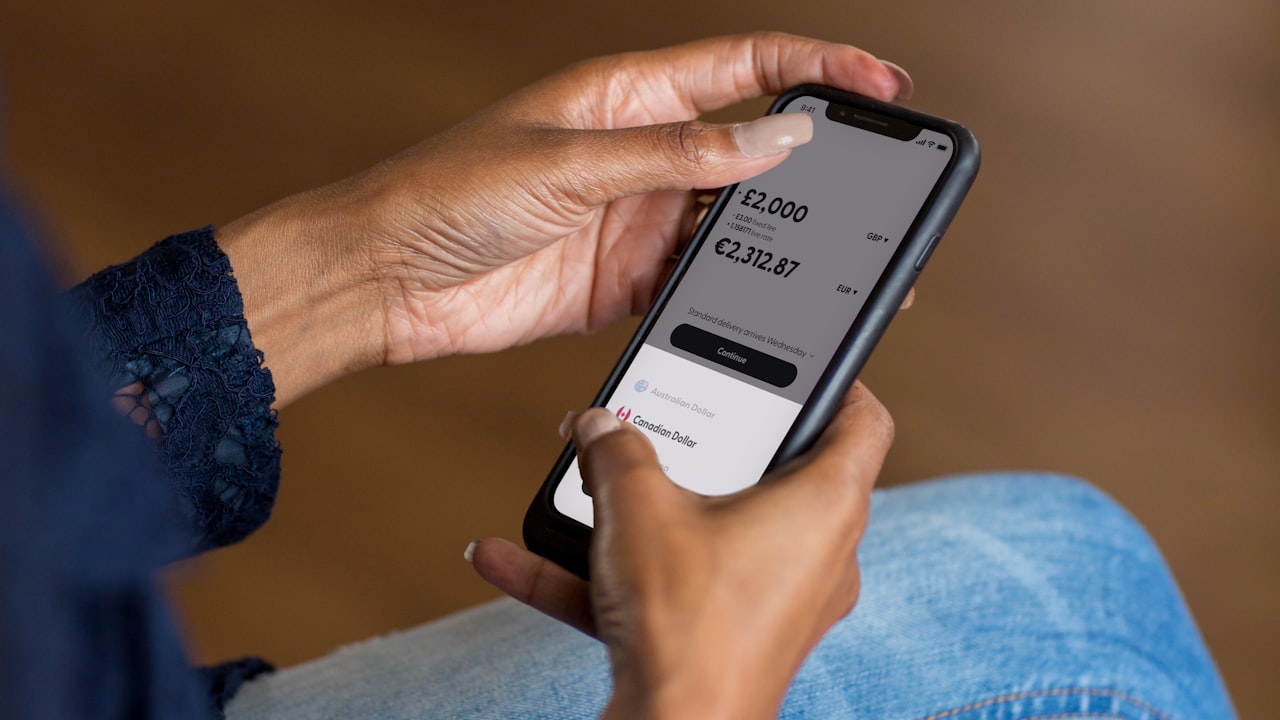
What Is Western Union?
Western Union has moved money across borders since 1871. It’s a peer-to-peer remittance service: you walk into an agent location, hand over cash, and a recipient in another country picks it up in local currency. Or you transfer via app/web and the money lands in a bank account.
Why people use it: availability (agents in 200+ countries), no need for a bank account, instant or same-day settlement, and a trusted brand.
The trade-off: fees are typically 3–7 % per transaction depending on route and amount, and your money sits in Western Union’s custody until withdrawal. If you’re comparing a crypto card vs cash app like Wise or Strike, Western Union is slower and pricier for most corridors.
Signal: Western Union works for occasional, urgent cross-border cash pickup. But for recurring international spending or cryptocurrency integration, it’s not designed for that use case.
What Is a Crypto Card?
A crypto card is a Visa or Mastercard linked to a blockchain wallet. You load cryptocurrency (usually stablecoins or ETH), and spend it anywhere Visa is accepted—ATMs, online, grocery stores. The issuer (like ether.fi) converts your crypto to fiat on the merchant’s network in real time.
ether.fi Cash is the flagship non-custodial crypto card. When you hold ether.fi Cash, you maintain full custody: no third party holds your private keys. You also earn yield—your underlying ETH keeps staking while you spend.
Why this matters: unlike Western Union (where a custodian controls your money), you have always-on access, no withdrawal delays, and you can earn passive returns on your balance. The crypto card vs chime comparison also highlights this: Chime is a neobank with FDIC insurance but no yield. Crypto cards are uninsured but yield-bearing.
Why it matters: If you hold crypto and want to spend it without selling it, a crypto card lets you do that while maintaining staking rewards. That’s unique to crypto-native products.
Speed: Crypto Card vs Western Union
Western Union transactions take 3–30 minutes online (express) or 1–3 business days via bank transfer, depending on the receiving bank.
Crypto cards settle in seconds to minutes. When you swipe an ether.fi card, the blockchain validates the transaction, the issuer converts your stablecoin to fiat, and the merchant receives payment in real time. From the merchant’s perspective, it’s just a Visa swipe.
Key metric: Crypto card transactions are 10–100 times faster than Western Union, especially for amounts under $5,000.
Risk: If you need guaranteed instant availability (like a branch pickup in an emergency), Western Union’s agent network is your fallback. Crypto cards require internet and a smartphone.
Signal: For recurring bills, online purchases, or travel spending, a crypto card’s instant settlement wins. For one-off cash pickup, Western Union is still the standard.
Fee Comparison: Western Union vs Crypto Card
Western Union
- Online transfer fee: 3–7 % of amount + flat fee (typically $5–$15)
- Agent cash pickup fee: 5–7 % + flat fee
- Example: Sending $500 to Brazil costs $25–$35 (5–7 %)
ether.fi Cash Crypto Card
- Card issuance: Free (Core tier), $40 refundable deposit (physical, Core tier)
- Spend cashback: Up to 3 % (you earn, don’t pay)
- FX on USD/EUR: 0 %
- FX on other currencies: 1 %
- ATM withdrawal: 2 %
- Example: Spending €500 with ether.fi = 0 % FX, plus 3 % cashback earned = you get ~€15 back
Key metric: On equivalent transactions, ether.fi undercuts Western Union by 8–10 percentage points because you earn cashback instead of paying fees.
Watch: Western Union occasionally runs promotional rates. Crypto card cashback varies by card tier and promo periods. Neither is fixed forever.
Why it matters: For frequent travelers or expats, cumulative savings from crypto card cashback compound. A person spending $10,000/year saves $300–$1,000 in ether.fi cashback alone.
Crypto Integration & Earning Yield
This is where crypto cards diverge completely from Western Union.
Western Union: Your money sits in fiat. No yield, no staking, no DeFi.
ether.fi Cash: You hold ETH, which continues staking and earning yield (~3–4 % annually) while you spend. Your balance works for you.
Example: You have $5,000 in ETH on ether.fi. You spend $100 per month (10 transactions). Your remaining $4,900 continues staking the whole time. At 3.5 % annual yield, you earn ~$171/year on that balance—while earning 3 % cashback on every swipe.
If you’re comparing a crypto card vs chime (or vs Wise, or vs traditional banks), this yield angle is the separator. Chime gives you no yield. ether.fi gives you staking returns.
Signal: If you hodl crypto for the long term and want to spend some of it, a crypto card lets you do both simultaneously. Western Union is a one-way spend flow—your money leaves.
Why it matters: Long-term crypto holders benefit from yield stacking + cashback at the same time. That passive income stream has no parallel in traditional remittance products.
Global Availability & Country Restrictions
Western Union
- Operates in 200+ countries and territories
- No KYC required for small cash pickups (some countries vary)
- Slowest in remote areas (fewer agents)
ether.fi Cash
- Available in 76+ countries and territories
- NOT available in: Belarus, Bangladesh, China, Cuba, Estonia, Finland, India, Iraq, Israel, Nepal, Netherlands, North Korea, Philippines, Russia, Syria, Turkey, Ukraine, Venezuela, Vietnam
- NOT available in 21 US states: Arizona, Delaware, Georgia, Idaho, Louisiana, Maryland, Mississippi, Missouri, Montana, Nevada, New Mexico, North Dakota, Ohio, Oregon, Rhode Island, South Dakota, Tennessee, Vermont, Washington, Wisconsin
- Requires KYC (ID verification + liveness check)
Risk: If you’re in a prohibited country, Western Union is your fallback. ether.fi Cash doesn’t operate there.
Key metric: ether.fi covers the top 76 crypto-friendly jurisdictions (US states, EU, UK, LATAM, APAC). If you’re outside that list, choose Western Union or a crypto card vs cash app alternative like Wise (fiat-only, but in 190+ countries).
Signal: For residents of the EU, UK, most of North America, and emerging markets (Brazil, Mexico, Argentina, Thailand, Indonesia), ether.fi Cash is available. Check your country on the ether.fi eligibility list before signing up.
Security & Custody: Who Holds Your Money?
Western Union
- Custody: Western Union holds your fiat in trust accounts
- Insurance: FDIC insured (US transfers), varies by country
- Risk: If Western Union fails, your money is technically protected. But you have zero control over how it’s stored.
ether.fi Cash
- Custody: You hold your own private keys (non-custodial)
- Insurance: No FDIC insurance (this is crypto, not a bank)
- Risk: If you lose your seed phrase, your money is permanently lost. But no third party can freeze, seize, or mismanage your funds.
Why it matters: Custody is a spectrum. Traditional banks (FDIC insured) are safe from bank failure but slow and censurable. Non-custodial crypto wallets (like ether.fi) are fast and censorship-resistant but require you to be responsible with your keys.
Risk: Crypto is volatile. Your ETH balance can swing 10–20 % in a day. Western Union’s fiat has no volatility risk.
Alternative: If you want custody safety without volatility, consider USDC or USDT stablecoins on ether.fi instead of ETH. They track the US dollar 1:1. Compare a crypto card vs chime in terms of stability: Chime gives you a checking account (stable, boring). ether.fi + stablecoins gives you a checking account plus yield.
When to Use Each: Use Cases
Use Western Union if:
- You need to send cash to a recipient in a remote area without a bank account
- You’re in a prohibited country and can’t use crypto cards
- You want fiat-only simplicity with zero blockchain knowledge
- You need a guaranteed pickup location (agent network)
Use a Crypto Card (ether.fi) if:
- You hold crypto and want to spend it without selling
- You want cashback and yield stacking
- You’re traveling internationally and want 0 % FX on USD/EUR
- You value self-custody and censorship resistance
- You want to earn passive income while spending
- You’re in an eligible country (76+ territories supported)
Key metric: A person who sends money 4+ times per year saves money with ether.fi. A person who sends money once per year might prefer Western Union’s simplicity.
Bottom Line
Western Union is a 150-year-old fiat remittance system. It’s slow, expensive (5–7 % fees), and widely available. Use it when you have no other choice.
ether.fi Cash is a crypto-native payment card. It’s fast (seconds), cheap (0 % FX on USD/EUR, 3 % cashback), and yield-bearing. But it requires crypto, KYC, and internet access.
The crypto card vs western union decision comes down to:
- Do you hold crypto? If yes, ether.fi wins on fees + yield. If no, Western Union works.
- Do you live in an eligible country? If no, Western Union is your only option.
- How often do you transfer? If frequent (4+ times/year), ether.fi savings compound. If rare, Western Union’s simplicity wins.
Frequently Asked Questions
Can I convert Western Union cash into crypto? Yes, but you’d need to buy crypto on an exchange afterward. It’s an extra step.
Is ether.fi Cash safe? Yes, but you control the keys. Backup your seed phrase or you lose your funds. This is the trade-off for non-custody.
What if I only want to hold stablecoins on ether.fi? You can. Use USDC or USDT (US dollar pegged). Same card, same speeds, zero volatility risk. No yield on stablecoins alone, but 3 % cashback still applies.
Can I use ether.fi Cash offline? No. Every transaction requires internet. Western Union can work via cash + agent, no phone needed.
Does Western Union ever refund fees? Rarely. Some promo periods offer reduced rates. ether.fi runs rotating cashback promos.
What happens if the merchant declines my ether.fi card? Swipe it again or ask for another payment method. The card is Visa, so merchant acceptance is ~99 %. Western Union has no card—it’s cash or bank transfer.
Risk & Disclosure
FTC Disclosure: DefyCard earns affiliate commissions when you sign up for ether.fi through our links. This does not affect your pricing—it’s how we fund the site.
Crypto volatility: Cryptocurrency asset prices swing 5–20 % daily. If you load ether.fi with ETH (not stablecoins), your card balance can drop in value overnight. This is not a risk with Western Union (fiat is stable).
Country restrictions: ether.fi Cash is not available in 20 countries and 21 US states. If you’re in a prohibited jurisdiction, you cannot use it. Western Union works almost everywhere.
Custody risk: ether.fi is non-custodial, meaning you hold your private keys. If you lose your seed phrase, your funds are permanently lost. Western Union’s fiat is held in regulated institutions with insurance. Choose the custody model that matches your comfort level.
KYC requirements: ether.fi requires government ID verification + liveness selfie to open an account. Western Union’s casual cash pickup (via agent) has lighter ID requirements for small amounts.