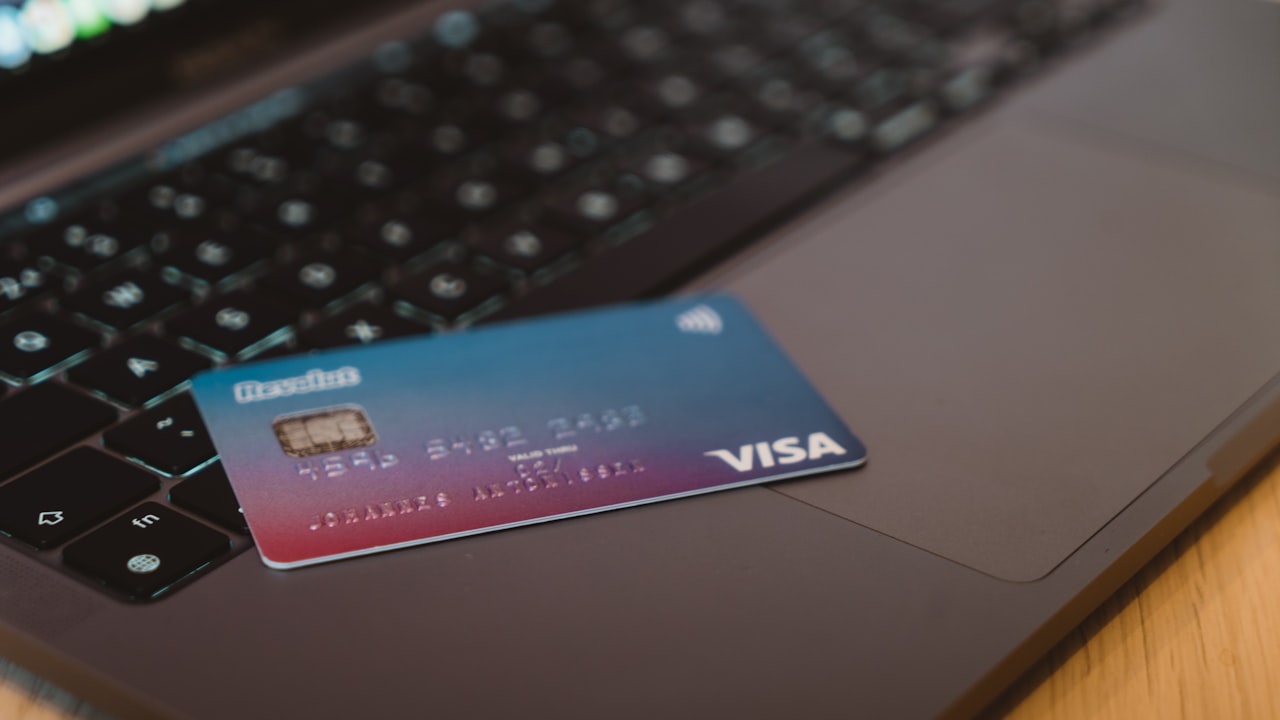
Why Crypto Cards Stop Working by Country
Crypto-card issuers are subject to strict financial regulations in every jurisdiction. A card works in a country only when three conditions are met:
- Regulatory approval is granted — the issuer has obtained Money Transmitter licenses, PSD2 registration (EU), or equivalent local authorization
- Compliance requirements are met — Anti-Money Laundering (AML) and Know-Your-Customer (KYC) standards must align with local law
- Banking partnerships exist — the card network (Visa, Mastercard) must have settlement rails in that country
When any of these fail, the issuer geofences the region — your crypto card declined at the POS terminal or ATM, even if your account balance is sufficient.
Signal: If you’re experiencing repeated declines, check whether your physical location is in a restricted region. Most issuers publish a country-availability list on their help center. ether.fi Cash, for example, is available in 76 countries but explicitly prohibited in 20 jurisdictions (including Russia, Ukraine, China, India, and Venezuela). Confirm whether your region supports ether.fi.
How to Tell if Country Restriction Is the Issue
If your crypto card stopped working in your country, follow these diagnostic steps to confirm the root cause.
Step 1: Verify your account is active and funded
Log into your crypto-card app and check:
- Account balance ≥ the attempted transaction amount
- No account suspension notice or warning
- Card status shows “active” (not frozen, expired, or blocked)
Step 2: Check the issuer’s official country-availability list
Visit the help center for your card issuer and search for “countries available” or “supported regions.”
- ether.fi Cash: help.ether.fi — lists 76 shipping countries and 20 prohibited jurisdictions
- Crypto.com Card: Available in 60+ countries; check app under “Your Regions”
- RedotPay: Covers 150+ countries with on-chain settlement
- Bybit Card: Supports 100+ regions with tier-based access
If your country is not on the list, your card will not process transactions there. This block is permanent unless the issuer launches service in your region.
Step 3: Test a small transaction elsewhere
Try:
- A small purchase ($5 USD) at a local merchant in a supported country
- An ATM withdrawal in a neighboring country on the issuer’s list
- The card network’s own test transaction (if available in-app)
If your card works elsewhere but not in your current location, the geofence is confirmed.
Risk: Don’t assume a crypto card declined error means fraud or account compromise. The most common cause is country-level blocking. Contact the issuer’s support before disputing the transaction with your bank — a chargeback can trigger account suspension and delayed fund recovery.
Why Country Restrictions Change (And What It Means for You)
The crypto regulatory landscape shifts constantly. A card that worked in your region a year ago may now be blocked due to regulatory shifts.
Common triggers for sudden stops:
- New regulation enacted — EU MiCA compliance (2024) or FCA tightening → card issuer pauses service pending license application
- Lost banking partnership — Visa settlement route closes in a country → temporary suspension of all card transactions
- Licensing application rejected — Issuer’s Money Transmitter license application denied → permanent withdrawal from market
- Geopolitical event — Sanctions or trade restrictions → issuer blocks entire region as compliance measure
- KYC address mismatch — Your registered address is in Country A but you’re now in Country B → card geofenced to KYC jurisdiction only
The last trigger is especially critical. If your crypto card is tied to a KYC address in your home country but you’re now working or living abroad, the card may decline even if your current location is on the issuer’s supported list.
Why it matters: If you’ve recently moved or relocated, update your address in the card issuer’s app immediately. Many cards require your transaction location to match your KYC jurisdiction or be on an explicit allowlist. Mismatched address is a top reason for crypto card declined errors in otherwise-supported regions.
Distinguishing Country Blocks from Other Decline Reasons
Not every declined transaction indicates a country restriction. Here’s how to identify the actual cause.
Declined due to country geofence:
- Card works fine in your home country or in supported regions
- Transaction declines every single time at merchants in a specific country
- Decline message is silent or generic (“transaction not allowed”)
- Account balance and card status appear normal in the app
- No alert or notification from the card issuer
Declined due to daily limit or cashback cap:
- Your crypto card cashback wrong amount or missing entirely (e.g., expecting 3% but receiving 0%)
- You’ve exceeded a daily or monthly spending limit (e.g., Core tier maxes out at $2,000/month)
- The issuer caps cashback at certain merchant categories or geographies
- You’re in a supported country but the specific merchant is restricted
Declined due to card suspension or fraud investigation:
- The app shows “Card Suspended” or “Account Under Review”
- You received an email asking you to re-verify your identity (KYC re-check)
- The card has expired, was never activated, or is pending delivery
- Your bank or the issuer has frozen the card due to suspected fraud
Key metric: ether.fi Cash users in supported countries should see up to 3% cashback on purchases and 0% FX fees on USD and EUR transactions. If you’re located in an eligible region but not receiving these rewards, the issue is likely tier restriction, merchant category exclusion, or a temporary account hold — not geofencing. Check your account tier and recent transaction history to confirm your crypto card cashback wrong amount complaint before escalating to support.
Which Cards Work in Your Region (Alternatives)
If ether.fi Cash or another card is unavailable in your jurisdiction, several alternatives offer broad geographic coverage.
For regions prohibited by ether.fi (20+ countries):
- RedotPay: 150+ countries; non-custodial (on-chain settlement). Cashback rates 1–2% by tier.
- Crypto.com: 60+ countries; custodial model. Up to 2% cashback; stronger brand recognition.
- Bybit Card: 100+ regions; tier-based rewards and boosts.
For EU and EEA countries:
- ether.fi Cash: 0% FX on EUR transactions is the strongest value proposition in Europe. Start with ether.fi for EU.
- Gnosis Pay: Non-custodial, Ethereum-native; limited merchant acceptance outside major cities.
For allowed US states:
- ether.fi Cash: Available in 29 states (excludes Arizona, Delaware, Georgia, Idaho, Louisiana, Maryland, Mississippi, Missouri, Montana, Nevada, New Mexico, North Dakota, Ohio, Oregon, Rhode Island, South Dakota, Tennessee, Vermont, Washington, Wisconsin). Yield-while-spending angle is strongest in the US.
- Crypto.com: Nationwide coverage; no state-level restrictions.
Quick tip: If your card has been geofenced and you’re in a supported region, try un-freezing or re-activating the physical card in the issuer’s app. Some cards auto-freeze after 90–180 days of inactivity.
Watch: Monitor your issuer’s help center monthly. If you’re in an edge-case region or experiencing intermittent declines despite being in a supported country, contact support with your transaction history. A country-level geofence is often temporary if the issuer is pending regulatory approval.