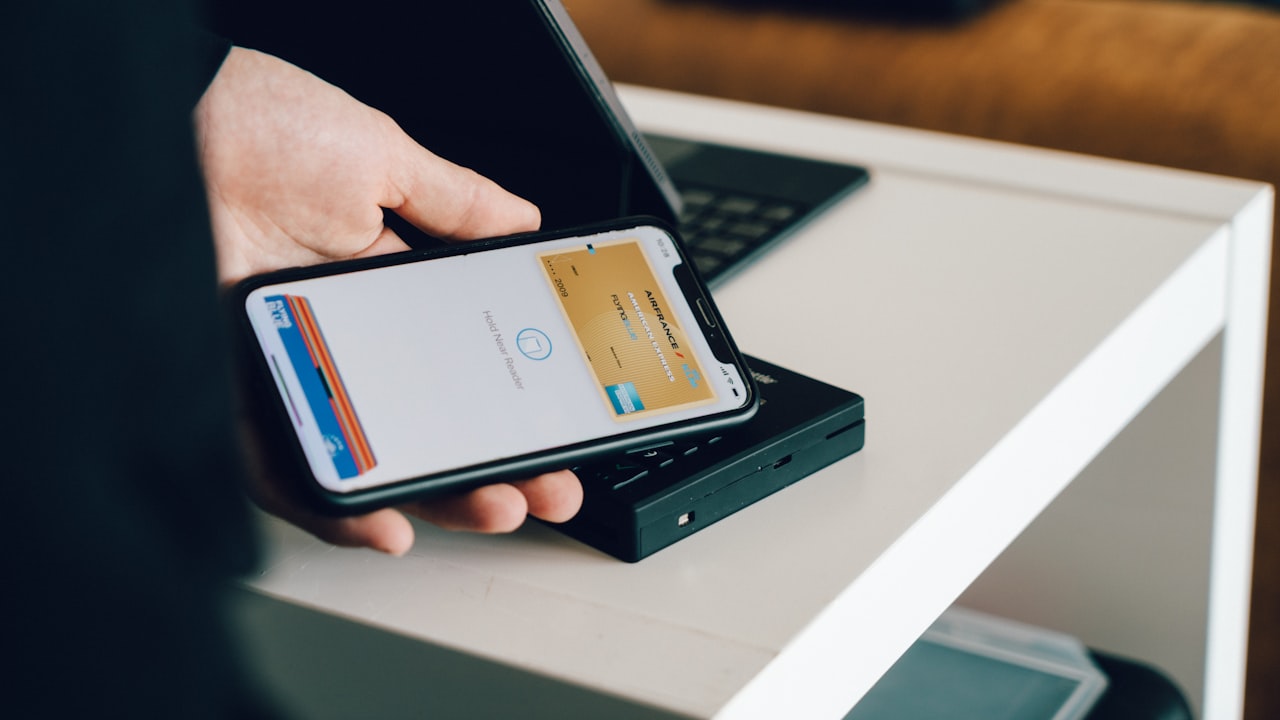
Why Crypto Cards Beat Traditional Remittance Apps
Sending money home the old way costs you. Western Union, MoneyGram, and even bank transfers charge 5–10% per transaction, impose daily limits, and lock your funds for 1–5 business days. A crypto card for sending money home eliminates all three.
Signal: If you’re sending more than $100/month home, a 5–10% fee means you lose $5,000–$12,000 per year to intermediaries.
With a crypto card, you load USD/EUR stablecoins (or withdraw from a CEX in minutes), and every transaction settles instantly on the Visa network. No waiting. No hidden markup. The ether.fi Cash card adds cashback—typically 3%—so you’re actually earning while you send.
Why it matters: A digital nomad earning $3,000/month in crypto and sending $1,500 home saves $75–$150 per month vs. a traditional remittance app (5–10% × $1,500). That’s $900–$1,800 per year, compounding month after month.
Zero FX on USD and EUR: The Killer Feature
Where remittance apps kill you is the foreign-exchange spread. Even cards with “no FX fees” bake a 1–2% markup into the exchange rate. The ether.fi Cash card doesn’t—it offers 0% FX on USD and EUR.
This matters most if you’re sending to:
- EU family (EUR corridor): save 1–2% per transaction.
- US-based recipients (USD corridor): pay no markup.
- Mixed currencies (e.g., USD earnings → EUR family): 0% conversion fee.
Risk: The 1% FX applies to all other pairs (GBP, JPY, MXN, BRL, etc.). If you’re sending to a non-USD/EUR country, the spread is lower than Western Union but still relevant. Check the live rate on your card before sending a large amount.
Watch: ether.fi may expand 0% FX coverage to additional pairs; monitor their blog and in-app notifications.
Crypto Cards for Digital Nomads: The Spend-and-Earn Loop
A crypto card for digital nomads does something traditional cards can’t: earn you cashback while holding crypto.
You’re already holding ETH (or USDC/USDT). Why not spend from that balance and get 3% back? The ether.fi Cash card links to your wallet—no intermediary, no exchange hold. You hold your keys; you decide when to send.
For a digital nomad earning $5,000/month in crypto:
- Local spend (accommodation, food, transport): $2,500 → 3% cashback = $75/month.
- Send home (family, bills, investments): $1,500 → 0% FX + 3% cashback = $45/month cashback + no fee bleed.
- Total monthly earn: ~$120 in pure cashback, plus zero FX losses. That’s $1,440/year—just from using the card you’d use anyway.
Key metric: ether.fi’s 3% standard cashback is the highest among non-custodial crypto cards. RedotPay (dominant on-chain card) offers up to 2.5% on a tiered basis; ether.fi matches or beats it across all tiers.
Crypto Card for Travel: Send and Spend in Any Supported Country
A crypto card for travel works even better when combined with sending money home. You’re already moving between countries—might as well hold your home currency (or a stablecoin) and spend without the markup.
Example: UK nomad in Thailand, earning in stablecoin:
- Spend THB locally: 1% FX fee (minimal).
- Send GBP home monthly: 0% FX (ether.fi’s card supports major pairs natively).
- Earn 3% on every local spend and every send.
Virtual card (instant, free) works online and in-app. Physical card (available to 76 countries) ships in 15+ business days or 1–3 days for Pinnacle tier. No need to carry multiple cards or worry about rate locks.
Why it matters: Nomads typically burn 5–10% annually just on FX spreads and fees across multiple cards and transfers. A single, low-fee card cuts that to nearly zero.
Membership Tiers and Spending Limits
ether.fi Cash operates three tiers:
Core: Up to $2,000/month spend, $40 refundable deposit for physical card, standard 3% cashback.
Luxe: Up to $10,000/month, waived deposit, same cashback.
Pinnacle: Up to $50,000/month, expedited 1–3 day physical card shipping, same cashback.
For someone sending money home, Core or Luxe covers typical remote-work budgets. Pinnacle is for entrepreneurs or high-volume earners.
What to Watch
- Country restrictions — ether.fi is available in 76 countries for physical-card shipment, but 20 countries are blocked entirely (North Korea, Iran, Syria, etc.). Verify your recipient’s country is supported before relying on this card as your sole remittance method.
- Stablecoin liquidity — the card works best if you can quickly convert earnings (crypto, payroll) into USDC/USDT on a major exchange. Exchanges in some countries have tighter off-ramps; plan your conversion route first. These rotate; check in-app notifications to maximize earn.
- KYC timeline — activation requires ID verification, liveness check, and address proof. US/EU typically complete in 24–48 hours; other regions may take 5–10 business days. Onboard early if you have a specific send date.
- Regulatory changes — crypto-card regulations are evolving globally (MiCA in EU, BitLicense discussions in US). If your country tightens rules, you may lose access; keep a backup remittance method (CEX withdrawal, p2p) ready.
Bottom Line
- If you’re sending $100+ home monthly: A crypto card saves you 5–10% per transaction vs. traditional remittance apps—easily $1,000+ per year.
- If you earn in crypto: The ether.fi Cash card’s 0% FX on USD/EUR + 3% cashback means you earn while you send. Non-custodial, so your keys stay yours.
- If you travel and send: One card handles both. Virtual card for instant online spend, physical card (free, refundable deposit) for in-person. No multiple accounts, no markup stacking.
- If your country isn’t supported or your recipient is in a restricted zone: Fall back to custodial alternatives (Crypto.com, Bybit Card) or CEX withdrawal + bank transfer (slower, but reliable). Not every corridor works with every card—verify first.
FAQ
-
q: “Does ether.fi Cash work for receiving money, or only sending?” a: Both. You can receive funds to your card (your card has a Visa-issued account number), but the card is optimized for spending, not holding. For receiving large amounts, use your wallet address directly and transfer to the card when needed.
-
q: “What’s the difference between 0% FX and a 1% FX fee?” a: On a $1,000 send, 0% FX means $1,000 arrives (minus only the recipient’s bank deposit fee, if any). 1% FX means ~$990 after the card’s spread, leaving less for your recipient. On monthly sends, that 1% adds up to $120+ per year.
-
q: “Can I use ether.fi Cash in my country?” a: Physical cards ship to 76 countries globally. But ether.fi Cash services are blocked in 20 countries and 21 US states. Check ether.fi’s support documentation to confirm your location is supported before signing up.
-
q: “Is there a daily or monthly limit on sends?” a: Yes—monthly spend limit depends on tier (Core $2k, Luxe $10k, Pinnacle $50k). Each send counts as a spend, so a $500 monthly send to family uses $500 of your limit. Plan accordingly if you also use the card for local spending.
-
q: “How long does it take to verify and activate?” a: KYC (ID + liveness + address) typically completes in 24–48 hours for US/EU. Virtual card is instantly ready once you pass KYC. Physical card ships 15+ business days (standard) or 1–3 days (Pinnacle tier).
-
q: “What if I lose the card or it gets compromised?” a: Virtual card can be disabled instantly in the app. Physical card can be reported lost and replaced (new deposit, 15+ day reship). Your wallet funds are unaffected—the card is a spend endpoint, not your private keys.
Risk & Disclosure
DefyCard publishes affiliate-linked reviews; we may earn a commission when you sign up through our links.
Crypto assets are volatile. While the ether.fi Cash card lets you spend stablecoins (USDC, USDT) to avoid price swings, the value of ETH (if you’re staking for rewards) fluctuates. Never hold more stablecoin on the card than you plan to spend in 30 days.
ether.fi Cash is available in 76 countries for physical-card shipment, but services are blocked in 19 countries (Belarus, Bangladesh, China, Cuba, Estonia, Finland, India, Iraq, Israel, Nepal, Netherlands, North Korea, Philippines, Russia, Syria, Turkey, Ukraine, Venezuela, Vietnam) and 21 US states (AZ, DE, GA, ID, LA, MD, MS, MO, MT, NV, NM, ND, OH, OR, RI, SD, TN, VT, WA, WI). Verify your location before signing up.
Remittances via crypto cards are subject to local money-transmission laws. Some countries require licensing to move funds internationally. Use this card within your jurisdiction’s rules—consult a tax/legal professional if unsure.
Last verified: 2026-09-14.