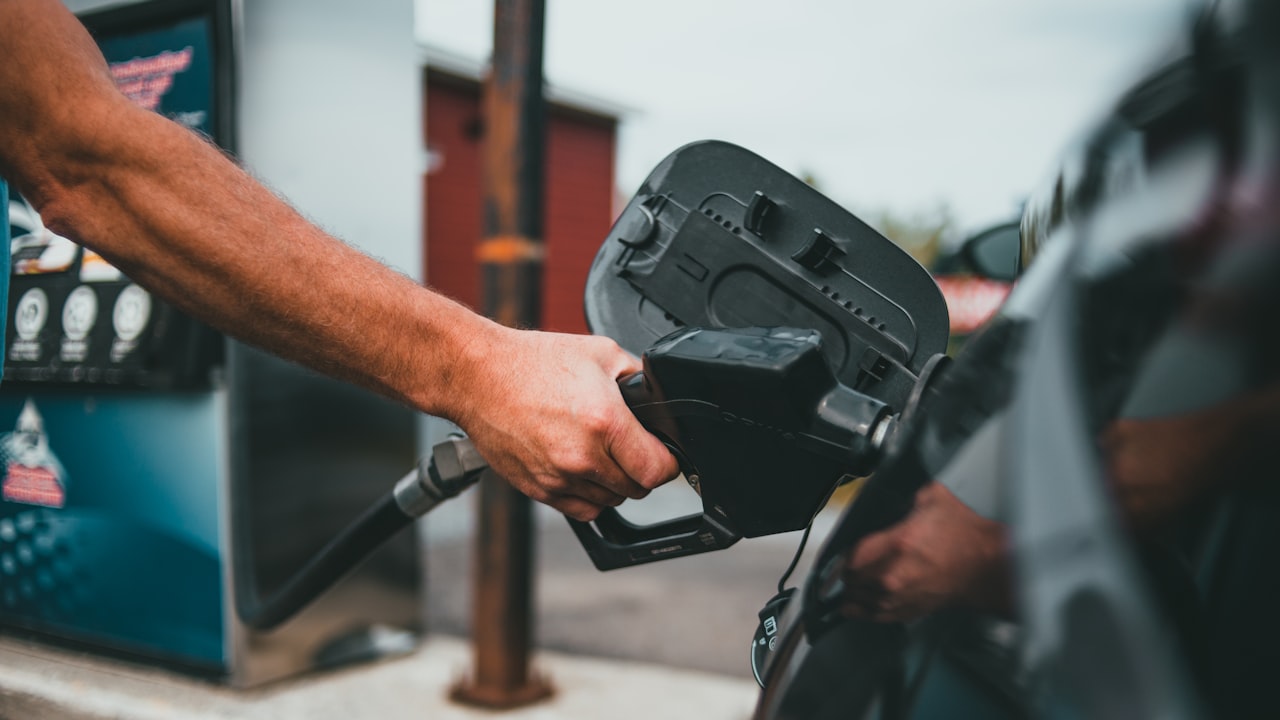
Why Gas Station Payments Matter for Crypto Holders
If you hold ETH and travel internationally, you know the pain: traditional debit cards charge 2–3% for foreign exchange (FX) on every pump fill. A $50 refuel abroad becomes $51.50–$52 in hidden fees. Over a year of travel, that’s hundreds of dollars vanishing into bank margins.
Crypto cards solve this by eliminating FX markup on major currencies. The ether.fi Cash card specifically targets travelers and expats by offering 0% FX fees on USD and EUR—the two most common transaction currencies at gas pumps globally.
Signal: If you’re already holding staked ETH and pay for fuel outside your home currency at least monthly, this card’s FX structure typically saves 2–3% per transaction versus traditional payment methods.
How Ether.fi Cash Works at Gas Pumps
The mechanics are straightforward:
- You activate a virtual or physical Visa card linked to your ether.fi account.
- At the pump, you tap or insert the card like any Visa.
- The transaction settles from your card balance in real-time.
- Cashback accrues to your account (0.1–0.3% depending on tier).
- Withdraw your balance as USDC or another supported stablecoin.
Why it matters: Unlike centralized crypto exchanges (which require KYC and hold your coins), the ether.fi Cash card is non-custodial—your ETH remains staked and earning yield while you spend.
The FX Fee Advantage: 0% on USD/EUR
This is where crypto cards differ most from traditional payment rails.
Traditional bank card (abroad):
- FX markup: +2–3%
- Currency conversion fee applied automatically
- ATM withdrawal: additional 2–3% + flat $2–5 fee
Ether.fi Cash (abroad):
- USD/EUR transactions: 0% FX fee
- Other currencies: 1% (competitive vs. 2–3% bank standard)
- ATM withdrawal: 2% flat (no hidden markup)
Key metric: A traveler spending $5,000 abroad in EUR would pay €100–€150 (at 2–3% FX) with a traditional card, but €0 with ether.fi Cash—assuming the transaction settles in EUR. Multiply across a year of frequent travel: the savings compound dramatically.
Crypto Card for ATM Withdrawals: A Supporting Use-Case
Not every vendor accepts cards—some gas stations and rural pumps still accept cash only. The ether.fi Cash card handles this via ATM withdrawals.
How it works:
- Swipe at any Visa-enabled ATM.
- Withdraw in local currency (USD, EUR, GBP, etc.).
- 2% ATM fee is applied and transparent at withdrawal.
When crypto card for ATM withdrawals beats traditional:
- You avoid stacking FX fees on top of ATM surcharges (which traditional banks often do).
- Most cost-effective in high-fee regions (Southeast Asia, Latin America) where local ATM operators charge 3–5% surcharges.
- The 2% fee is fixed and predictable; no hidden charges.
Why it matters: If you’re in a country where fuel is cash-only, you can withdraw directly from your ether.fi balance without waiting for a bank transfer or losing 3–4% to traditional card ATM fees. Combined with 0% FX on EUR (beta), your total cost remains predictable and low.
Crypto Card for Utility Bills and Recurring Payments
Beyond gas, the ether.fi Cash card accepts payments at any Visa-enabled merchant—including online utilities, subscriptions, and government payments.
Supported recurring use-cases:
- Electric, water, internet bills (online or in-person).
- Rent or mortgage pre-payments (when landlord accepts Visa).
- Phone and streaming subscriptions.
- Fuel delivery services and vehicle insurance.
Key metric: A household averaging $300/month in utility payments at 1% cashback earns $36/year—passive income from bills you’d pay anyway.
Signal: Crypto card for utility bills works best in countries with mature online payment infrastructure (US, EU, UK, Canada). In developing markets, cash or bank transfer may remain the only accepted option.
Each successful purchase accrues cashback to your account as USDC—not points locked into a rewards program, but real money you can withdraw anytime.
Comparing Crypto Cards for Spending vs. Traditional Payment Methods
Ether.fi Cash (non-custodial crypto card):
- Pros: 0% FX on EUR (beta); cashback on all spending; non-custodial (your coins, your control); earn staking yield while spending.
- Cons: Requires card setup; $40 deposit (refundable); 15+ day shipping; spending caps by tier ($2k Core, $10k Luxe).
- Best for: Travelers, expats, frequent overseas spenders who already hold staked ETH.
Trading platform cards (Crypto.com, Coinbase):
- Pros: Bundled with exchange account; instant virtual card; staking bonuses.
- Cons: Custodial (platform holds your coins); 1–2% FX fees; approval required for high tiers.
- Best for: Users who already trade regularly and want a single account.
Traditional bank card:
- Pros: Universal acceptance; fraud protection; rewards in local currency.
- Cons: 2–3% FX on foreign transactions; slow international transfers; no crypto integration.
- Best for: Domestic-only spenders or non-crypto holders.
Alternative consideration: If ether.fi Cash is unavailable in your country, RedotPay (the on-chain market leader) or Crypto.com (custodial fallback) may be options depending on your region.
What to Watch Before Signing Up
- Country eligibility: ether.fi Cash is available in 76+ countries for physical shipment, but some regions have restrictions on fiat services. Verify your country on the ether.fi help center.
- Tier and spending caps: Core tier is limited to $2,000/month spending. If you fuel up frequently, upgrade to Luxe ($10k/month) or Pinnacle ($50k/month) to unlock higher limits.
- Card shipping timeline: Standard physical cards take 15+ business days. Pinnacle tier gets 1–3 day expedited delivery; budget accordingly if you need urgent access.
- KYC requirements: Full government ID verification and liveness check required—plan for 2–5 days to complete approval.
- Network expansion: ether.fi adds regions quarterly. If unavailable in your country, check back in 60–90 days; expansion is accelerating, especially in LATAM and APAC.
Risk Disclosure and Important Notes
DefyCard publishes affiliate-linked content; we earn a commission when you sign up via our links. This does not affect the accuracy of our reviews. Always verify product terms on ether.fi’s official website before signing up.
Crypto assets, including staked ETH, are volatile. The ether.fi Cash card is non-custodial—your ETH remains in your control and wallet. However, if ETH price falls sharply, your card balance (in fiat equivalent) decreases accordingly. This is not a traditional bank account; there is no FDIC insurance or government deposit protection.
Foreign exchange rates and Visa rates may differ from spot rates by 0.1–0.3%. The 0% FX fee means no markup—but you are subject to real-time Visa settlement rates. Card issuance, limits, and country availability can change; always check ether.fi’s help center for current information before signing up.